

This post may contain affiliate links. Please see our disclosure policy for more details.
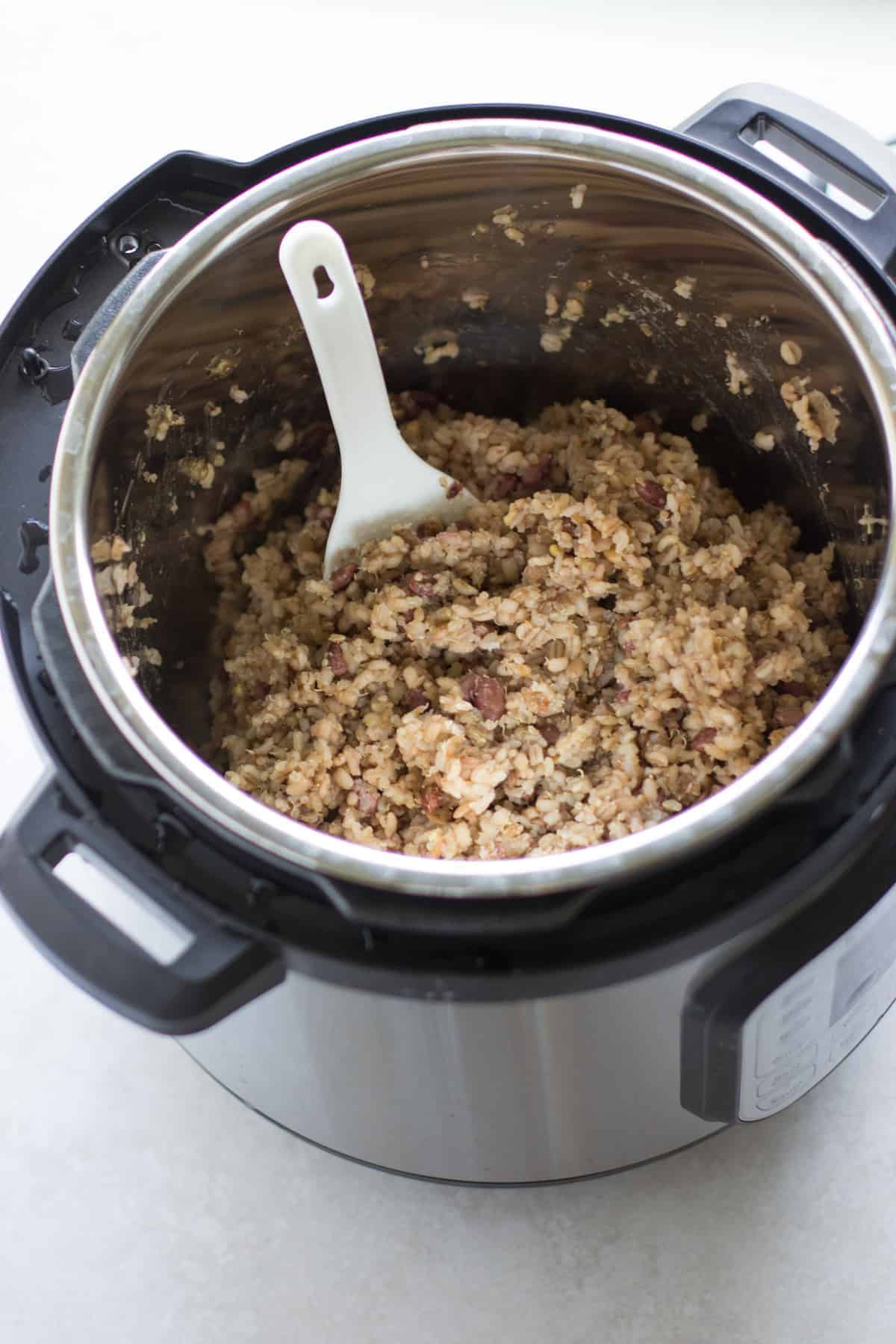
If you love Korean multigrain rice (잡곡밥, japgokbap) but don’t always have a specialty grain mix on hand, this pantry-friendly version is for you.
Traditionally, Korean multigrain rice is made with short-grain rice and a blend of beans and whole grains. This version keeps that nourishing, hearty feel, but uses simple grains you can find at most grocery stores. It’s cozy, filling, naturally rich in fiber and iron, and perfect for babies, toddlers, and the whole family.
And yes! I’m showing you how to make it in both the Instant Pot and a rice cooker.
What Is Korean Multigrain Rice (Japgokbap)?
Japgokbap (잡곡밥) literally means “mixed grain rice.”
It’s traditionally made with:
- Short-grain white rice
- Barley
- Black rice
- Millet or sorghum
- Beans
Every family has their own version. Some prefer more grains, others keep it mostly white rice with just a little added texture.
This pantry-friendly version keeps things simple while still giving you that hearty, satisfying feel.
Reasons to Love this Multigrain Rice
As a pediatric dietitian and mom, I love this rice because:
- It adds iron from lentils and beans
- It boosts fiber without being overwhelming
- It exposes little ones to different textures
- It’s more filling than plain white rice
- It works with so many meals
If you love white rice but want to gently increase variety and nutrition, this is such an easy step.
Key Ingredients
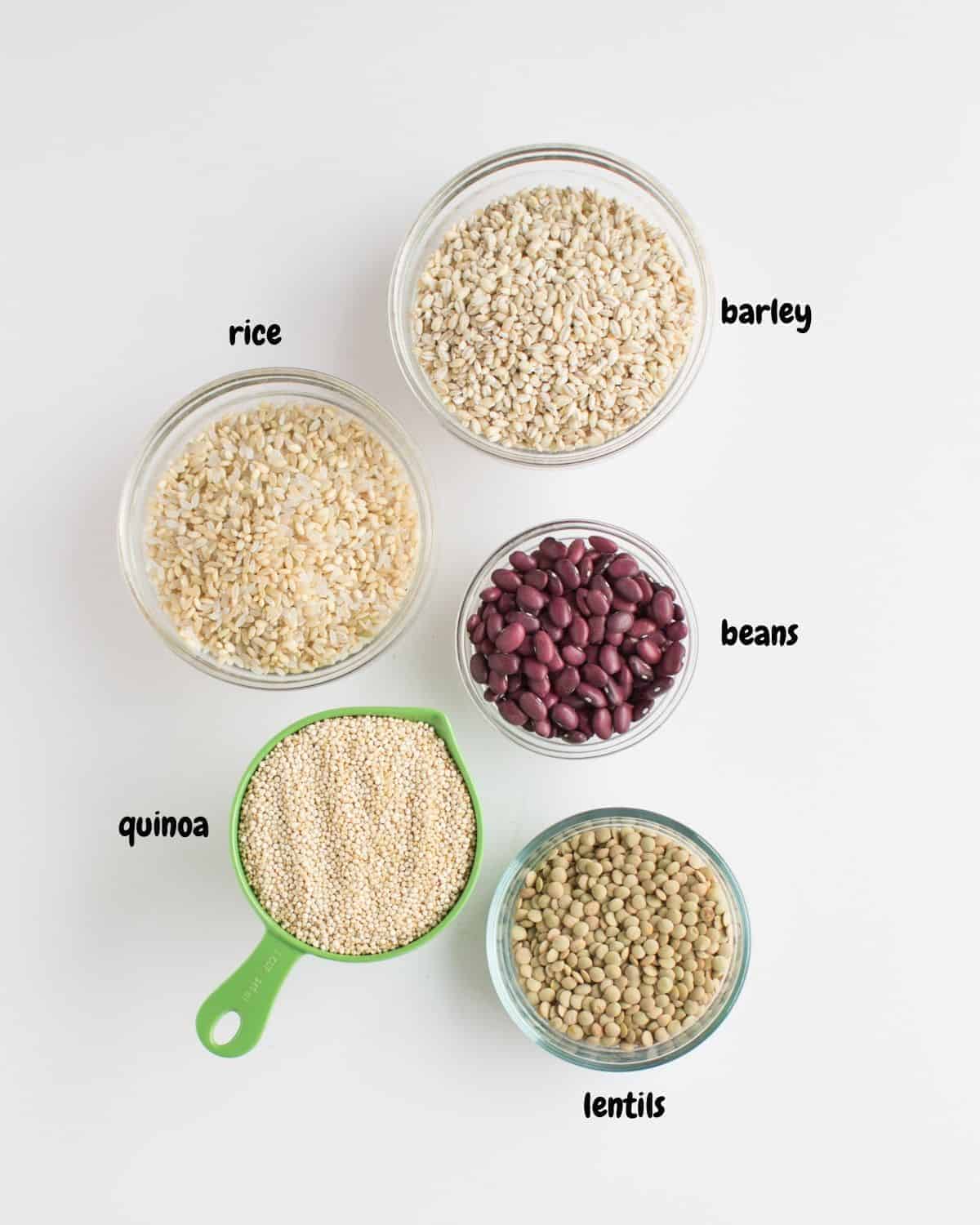
This version uses easy-to-find grains:
- 1 cup short-grain white rice
- 1 1/2 cup barley
- 1/2 cup quinoa
- 1/2 cup red lentils
- 1/2 cup black beans
Optional (for more traditional look and flavor):
- 1–2 tablespoons black rice
The black rice gives that subtle purple tint you often see in Korean multigrain rice, but it’s completely optional.
How to Make Multigrain Rice
Instant Pot Method
You’ll find the full recipe card with all the exact measurements at the bottom of this post.
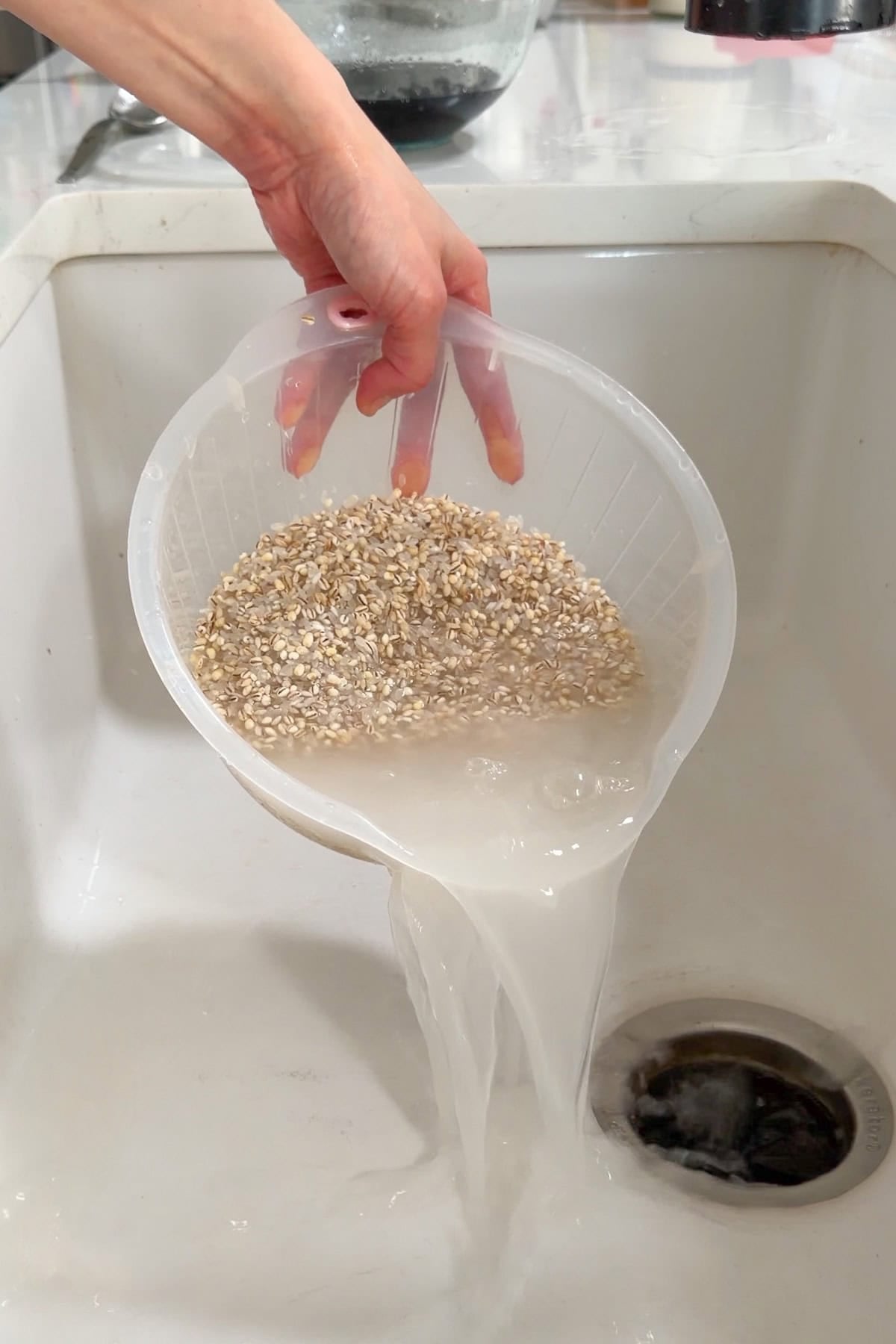
Step 1: Rinse all grains thoroughly until water runs mostly clear.
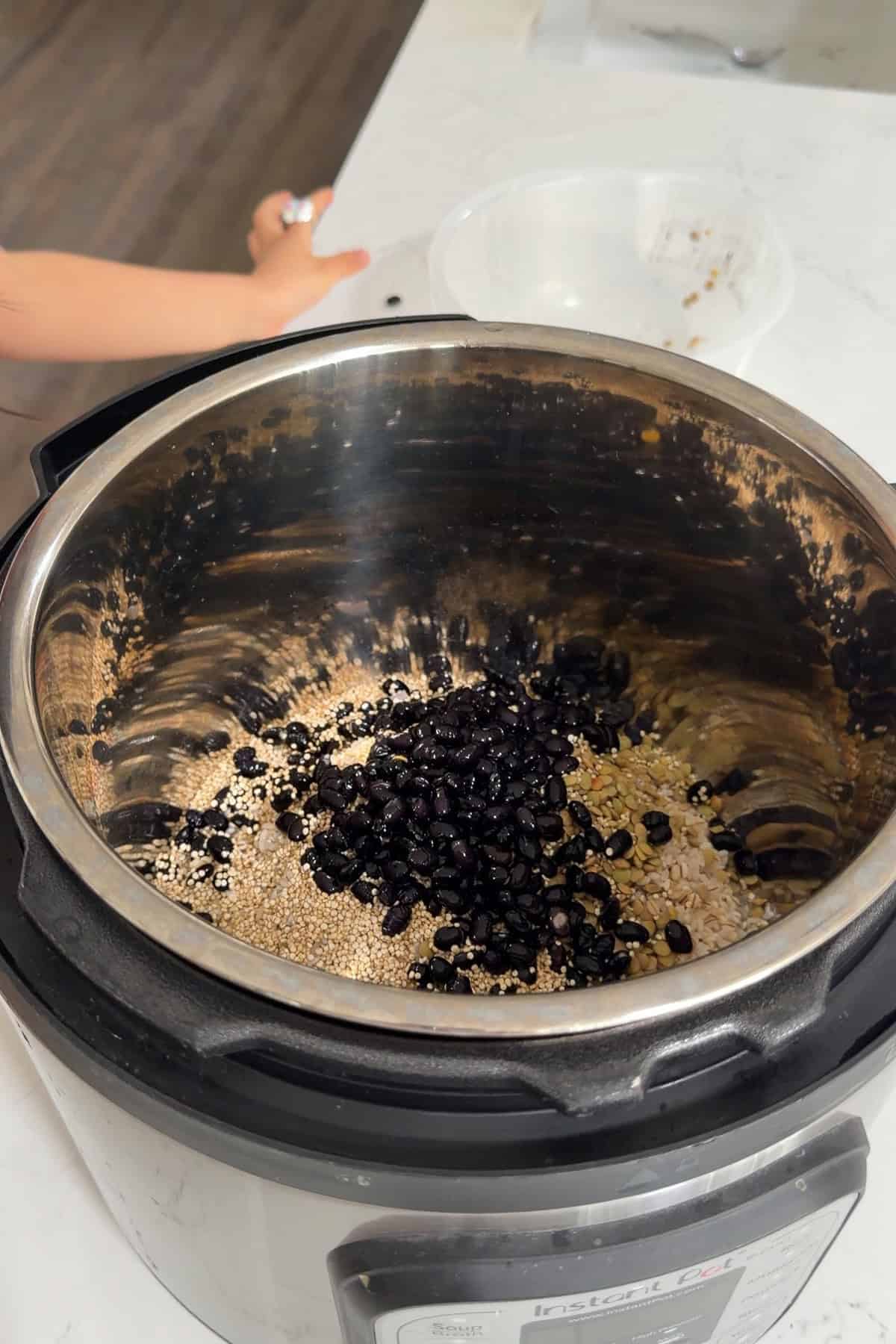
Step 2: Add everything to the Instant Pot.
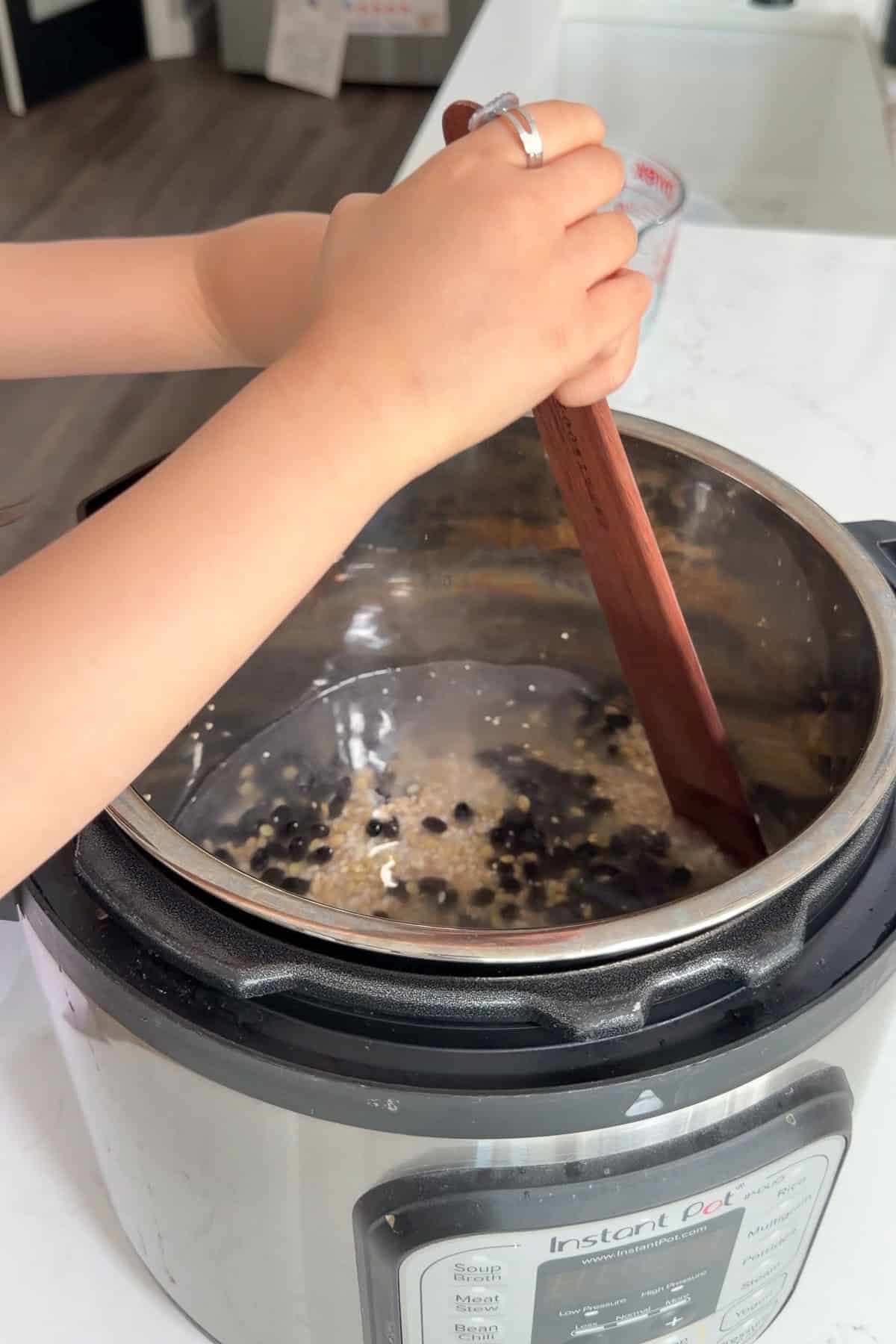
Step 3: Add 4 1/2 cups of water and stir well.
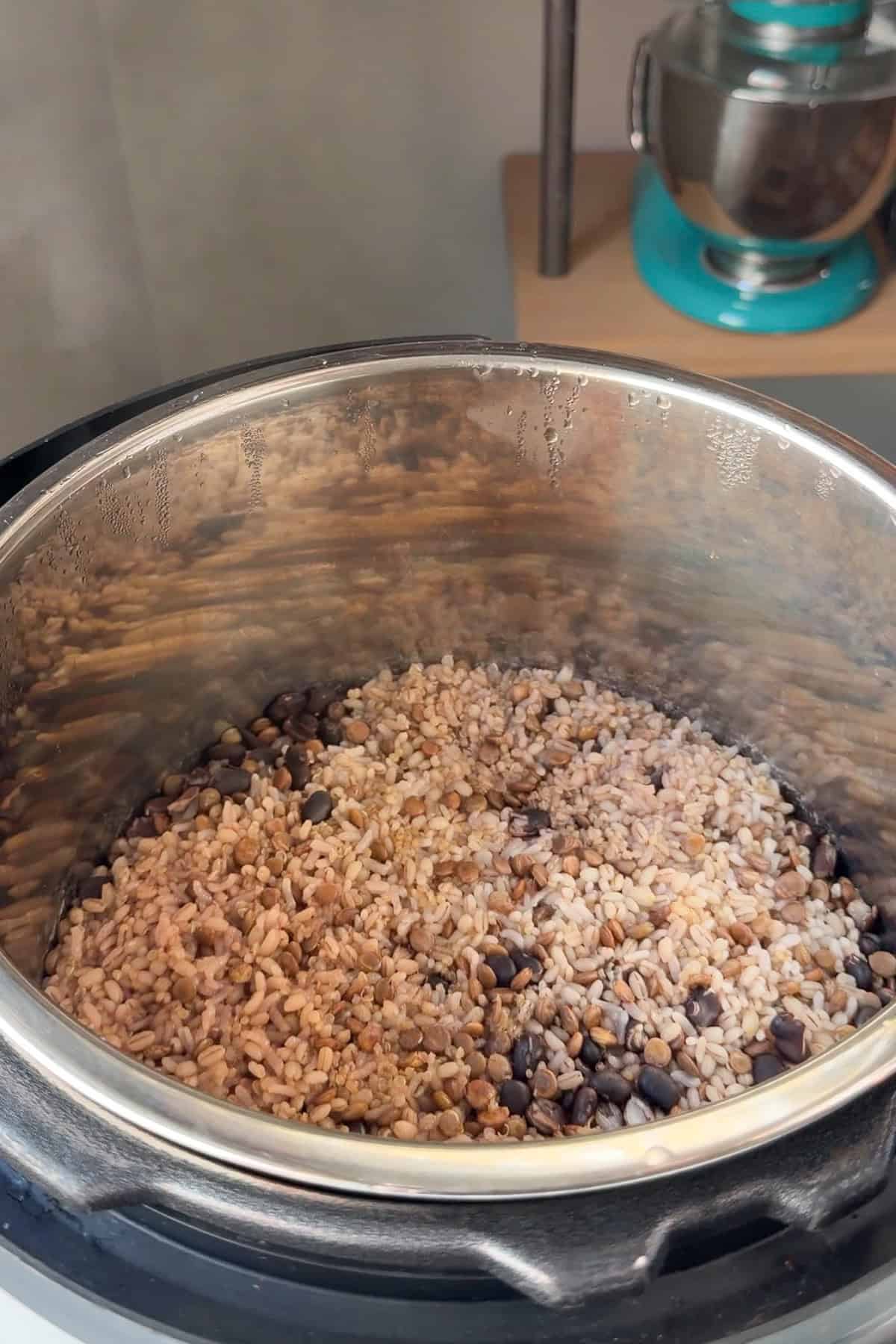
Step 4: Cook on high pressure for 20 minutes. Allow to naturally release.
Rice Cooker Method
- Rinse rice and grains thoroughly.
- Add everything to your rice cooker bowl.
- Add 5 1/2 cups of water
- If your cooker has a “multigrain” or “brown rice” setting, use it. Otherwise, use the regular white rice setting.
- Let rest for 5-10 minutes after cooking before fluffing.
Expert Tips
- You don’t need to soak the grains and lentils, but I do recommend soaking the beans for at least 4 hours.
- The two beans I recommend are black beans or small red beans (not kidney). If you want a more moist and softer texture (which is what I recommend for babies especially), use the black beans.
- White rice is most recommended as its softer and chewier in texture.
- Rinse grains by rubbing with hands. Repeat 2-3 times and drain. If you don’t have this tool, trust me. You NEED it!
- You can, no you should totally freeze leftovers. Will def come in handy on busy weeknights.
- I recommend using the natural release pressure for this. If you do a quick pressure release, the mixture will be chewier, which makes it difficult for babies to work through.
Serving Suggestions
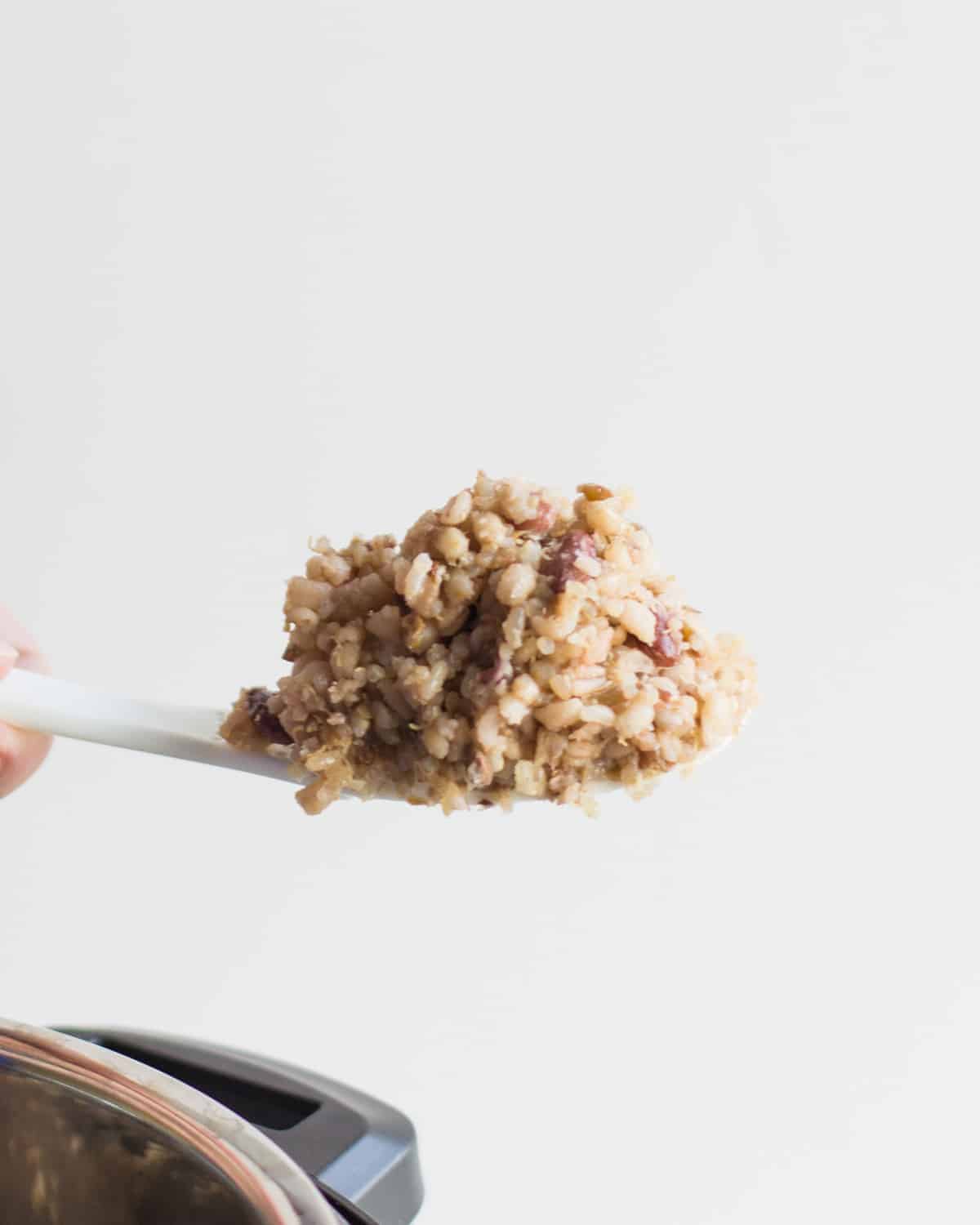
Enjoy this multigrain rice with:
- Moo Goo Gai Pan
- Easy baked shrimp cakes
- Healthy Sweet and Sour Meatball Stir-Fry
- Baby-Friendly korean Bulgogi
- Bibimbap with Beet Sauce
- Instant Pot Korean Chicken and Potatoes
- Non Spicy Korean Tofu Soup
- Instant Pot Peanut Chicken and Broccoli
Multigrain Rice FAQs
It varies, but often includes short-grain rice, barley, black rice, millet, sorghum, and beans.
It likely needs more water or longer steaming time. Natural release in the Instant Pot makes a big difference.
Yes. You can reduce or omit beans if preferred, but they do add iron and protein.
More Rice Recipes


Did you make this recipe? Leave a rating below and let me know how you liked the recipe! Your feedback means so much to me!

Instant Pot Mixed Grains Rice
Want to remove ads? Join the Kidfriendly Meals Club >>
Equipment
Ingredients
- 1 1/2 cup (250g) whole barley
- 1 cup (200g) white rice (see note)
- 1/2 cup (100g) quinoa
- 1/2 cup (100g) green lentils
- 1/2 cup (100g) dried beans, black beans preferred (see note), , soaked for at least 4 hours
- 4 1/2 cups water
Instructions
- Wash grains and lentils by rinsing and rubbing between your hands in water. Drain and repeat 2-3 times. Drain and discard water.
- To the Instant pot, add all the ingredients
- Add 4 1/2 cups of water to the pot.
- Close the lid, make sure the pressure valve is in the sealing position, and cook on high pressure 20 minutes.
- Allow to naturally release until pressure subsides, or wait at least 20 minutes before doing a quick release
- Once done, give the rice a REALLY good mix! Enjoy!
Notes
- You don’t need to soak the grains and lentils, but I do recommend soaking the beans for at least 4 hours.
- The two beans I recommend are black beans or small red beans (not kidney). If you want a more moist and softer texture (which is what I recommend for babies especially), use the black beans.





Will pearl barley work in this recipe?
I love this recipe! It’s so easy and healthy, and my family loves it!
I’m so glad!
Hi! I’ve been wanting to try a way to incorporate mixed rice in my toddlers diet and this recipe looks great! Love that it’s also freezable! How would you suggest we reheat the frozen rice though?
Hi! Thaw in the fridge overnight and reheat in the microwave!
I made this with some chicken bone broth I had made in the pressure cooker earlier. I didnt have black beans around so I just substituted for some red adzuki beans. Sooo delicious!
Ooh love the idea of using bone broth! So glad you enjoyed this recipe!! Thanks for taking the time to let me know 😉
Hi, why green lentils? Can I use split red lentils instead? Just happen to have that in the pantry and don’t want to buy another bag of lentils. How are they different? Thanks!
Red lentils are more delicate and you can use it but you’ll end up with a mushier mixture, which you might enjoy. If you have a baby, will be easier for them to eat
HI Min,
Thank you for the wonder recipe yet again. Just a quick one, I noticed that you used small red beans(azuki beans I assume)? instead of kidney beans? Is there a particular reason to that?
The kidney beans were still a bit “toothsome” after cooking and tasted too beany. And between the azuki and black beans, I recommend trying the latter first! For some reason, the mixture turns out softer.
Hi Min!
Is it possible to use normal rice cooker for this? If so, does the water level need to be changed? Thanks!
I believe it will work, but I haven’t tried it so not sure about how it would affect the grains:water ratio..sorry!
Can you use canned black beans?
I actually haven’t tried but I believe the mixture will become too wet. If so, perhaps try doing the quick release instead of waiting at least 20 minutes.
This recipe looks so yummy—I love a chewy grain side. I recently read that babies don’t have the necessary enzyme to breakdown grains, wasn’t sure the validity of this claim. Would love to know your thoughts. Thanks for all the great recipes, Min!
So the common argument is that babies don’t make enough amylase, which is necessary to digest complex carbs. However, research doesn’t support this. Amylase is found both in saliva and pancreas. Salivary amylase is responsible for the initial breakdown of carbs, which research shows that this enzyme becomes abundant between 3-6 months of age. Now, most digestion occurs in the small intestine. It is true that pancreatic amylase levels are very low in babies. BUT there are many other enzymes that help break down the carbs. There’s also some research supporting that their bodies will secrete more amylase when introduced to complex carbs. hope this helps ease your mind.
It does—thank you!
Hi! This looks great! Just wondering what you would suggest to replace the barley with to make it gluten free? Or would it be better to eliminate and reduce the water? Thanks!
Oh I definitely think you’ll need to replace with another grain. hmm…I haven’t experimented with it myself, but I would try buckwheat or amaranth