

This post may contain affiliate links. Please see our disclosure policy for more details.

This vegetarian japchae is a simple, family-friendly version of the classic Korean glass noodle dish. You’ll get those signature chewy noodles and savory-sweet flavor, just with a streamlined method that makes it doable any night of the week.
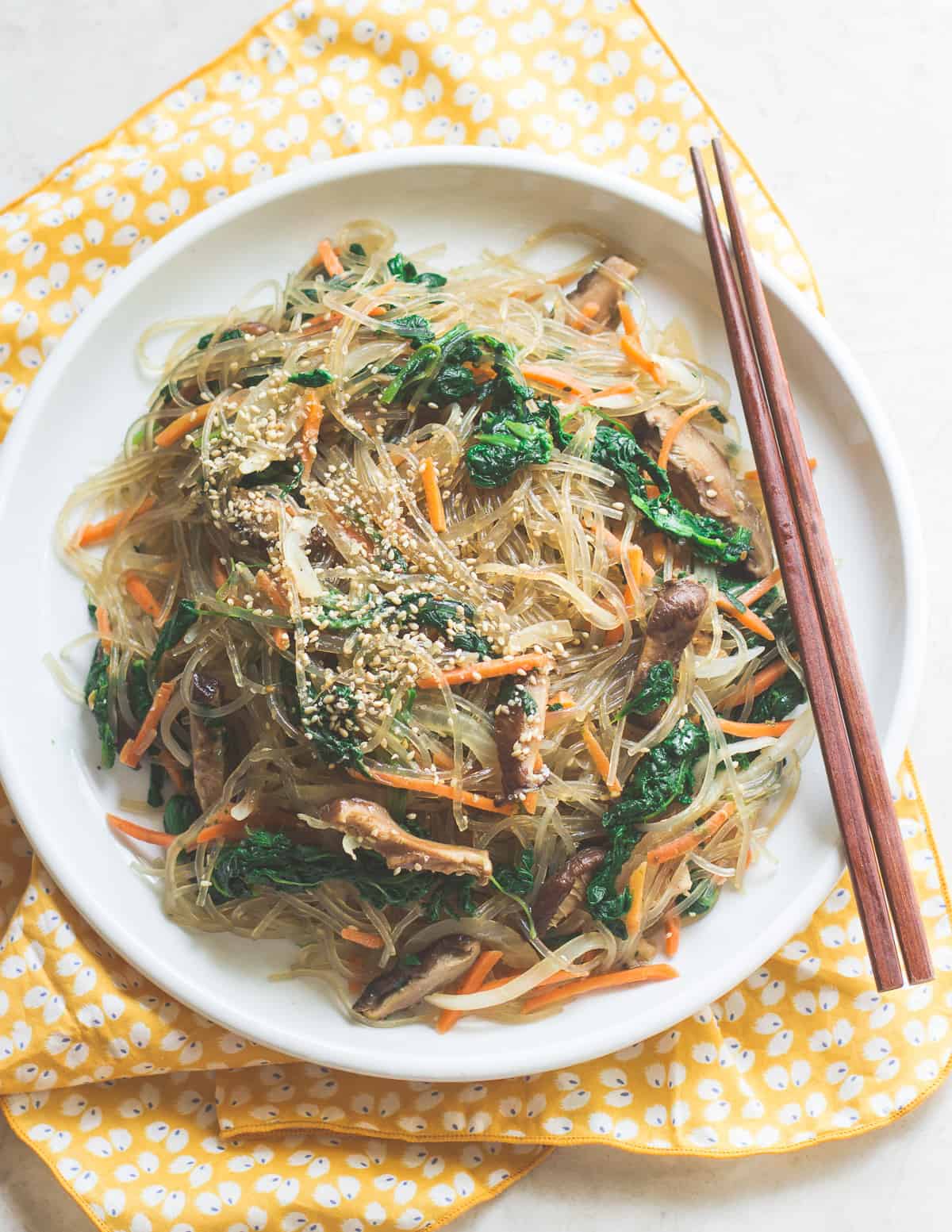
Why You’ll Love This Recipe
- Perfect for busy weeknights and make-ahead meals
- Simple, streamlined method (no need to cook everything separately)
- Naturally dairy-free and easy to make vegan
- Flexible—use whatever vegetables you have
- Great warm, room temperature, or cold
If you’ve ever had japchae, you know… it’s one of those dishes that feels special but is actually so simple once you know how to make it.
This vegetarian japchae is inspired by how my mom but adapted for real life as a busy mom. You’ll still get those chewy, glossy noodles and that sweet-savory flavor… just without the extra steps of cooking every ingredient separately.
It’s the kind of dish that works for everything! Quick dinner, meal prep, or something a little different to share with family.
What Is Vegetarian Japchae?
Japchae is a classic Korean dish made with dangmyeon (sweet potato glass noodles) tossed with vegetables and a savory-sweet soy sauce.
Traditional versions often include beef, but this vegetarian japchae skips the meat while still delivering all the flavor and texture that makes the dish so loved.
The noodles are naturally chewy and slightly springy, and the sesame-soy sauce ties everything together in the most satisfying way.
Key Ingredients
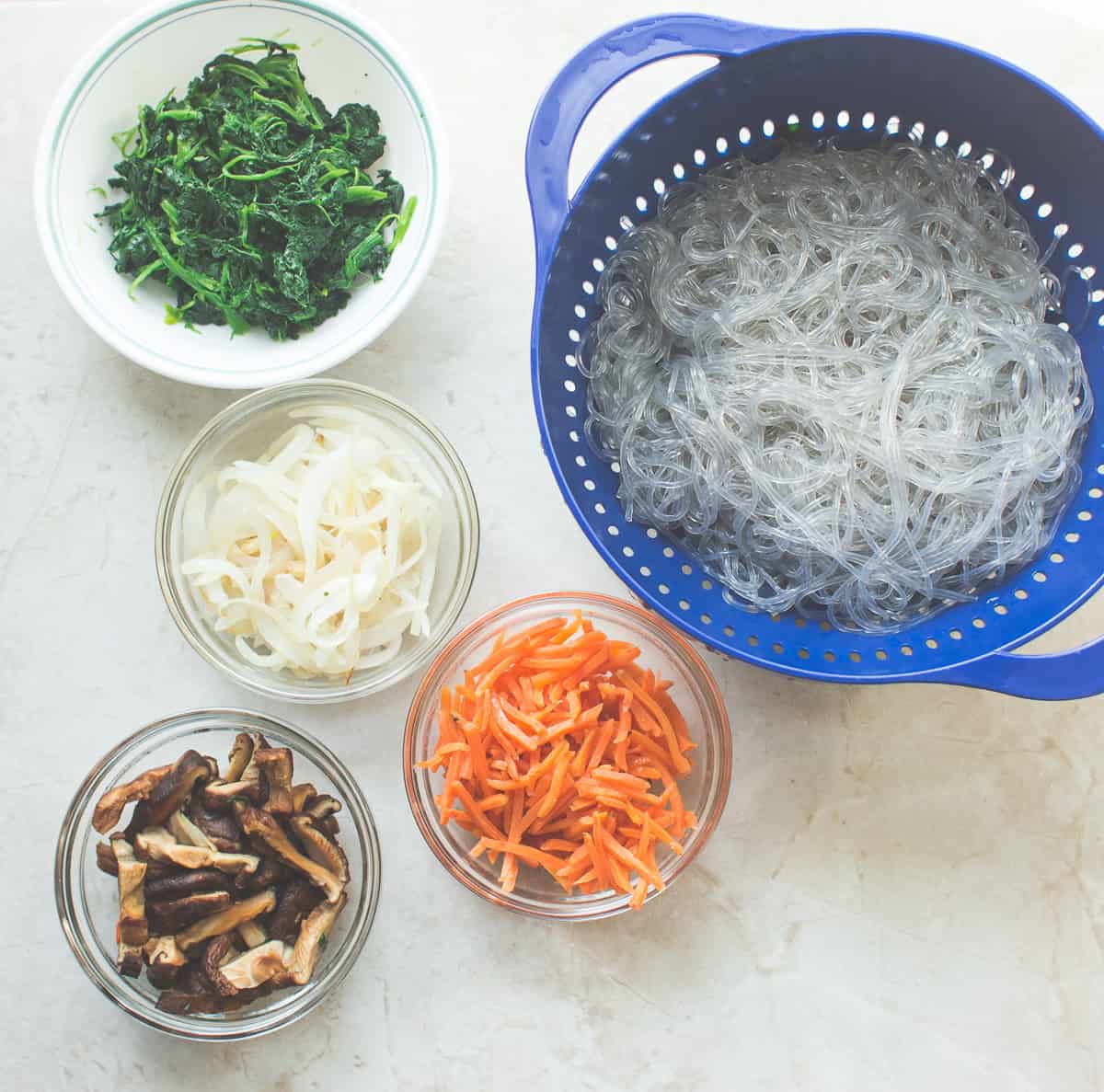
- Korean sweet potato noodles – also called dangmyeon, Korean vermicelli or glass noodles. Made from sweet potato starch, these noodles, once cooked, are chewy and springy. You will easily find them at Asian grocery stores.
- Fresh vegetables – While you can add whatever veggies you wish, the most popular ones include onion, carrots, and red bell peppers.
- Shiitake mushrooms – this is a must in my opinion as it provides a meaty flavor to the dish.
- Japchae sauce – a combination of soy sauce, sesame oil, and brown sugar or honey to create the perfect balance of sweet and savory notes
- If you want to make this more filling, you can add: Tofu (pan-fried or baked), edamame, or soft scrambled egg strips (for vegetarian, not vegan)
How to Make the Easiest Vegetarian Japchae
One rule that my mom stressed is to cook the colorful vegetables separately so that each and every ingredient retains its maximum flavor, color, and texture without blending with the other ingredients.
BUT as a busy mom of two littles, time is a precious commodity, so I came up with my shortcut—One-Pot Japchae. This is how I usually make it, and guess what? When I made it for my mom, even she was impressed!
Here’s how to make it!

Step 1: In a large pan, boil the sweet potato noodles for 6–8 minutes until they’re soft and chewy (not al dente!). Drain, rinse under cold water, and set aside. In the same pan, wipe it down and heat 1 tablespoon of sesame oil. Add thinly sliced onions and julienned carrots, and stir-fry until softened.

Step 2: Pour in japchae sauce (recipe at the bottom of the post), 1/4 cup of water, then add the cooked noodles. Let the mixture come to a gentle boil, allowing the noodles to soak up the flavor.

Step 3: Add the sliced mushrooms and fresh spinach. Cover the pan to let everything steam together for a couple of minutes.

Step 4: Drizzle with more sesame oil and sprinkle with sesame seeds for that nutty finish.
Recipe Tips
- Don’t overcook the noodles! They should be chewy, not mushy
- Toss the noodles while warm so they absorb the sauce better
- Taste and adjust. Korean cooking is very much “by feel.” If it tastes flat, it usually just needs a bit more soy sauce or sesame oil.
Serving Suggestions
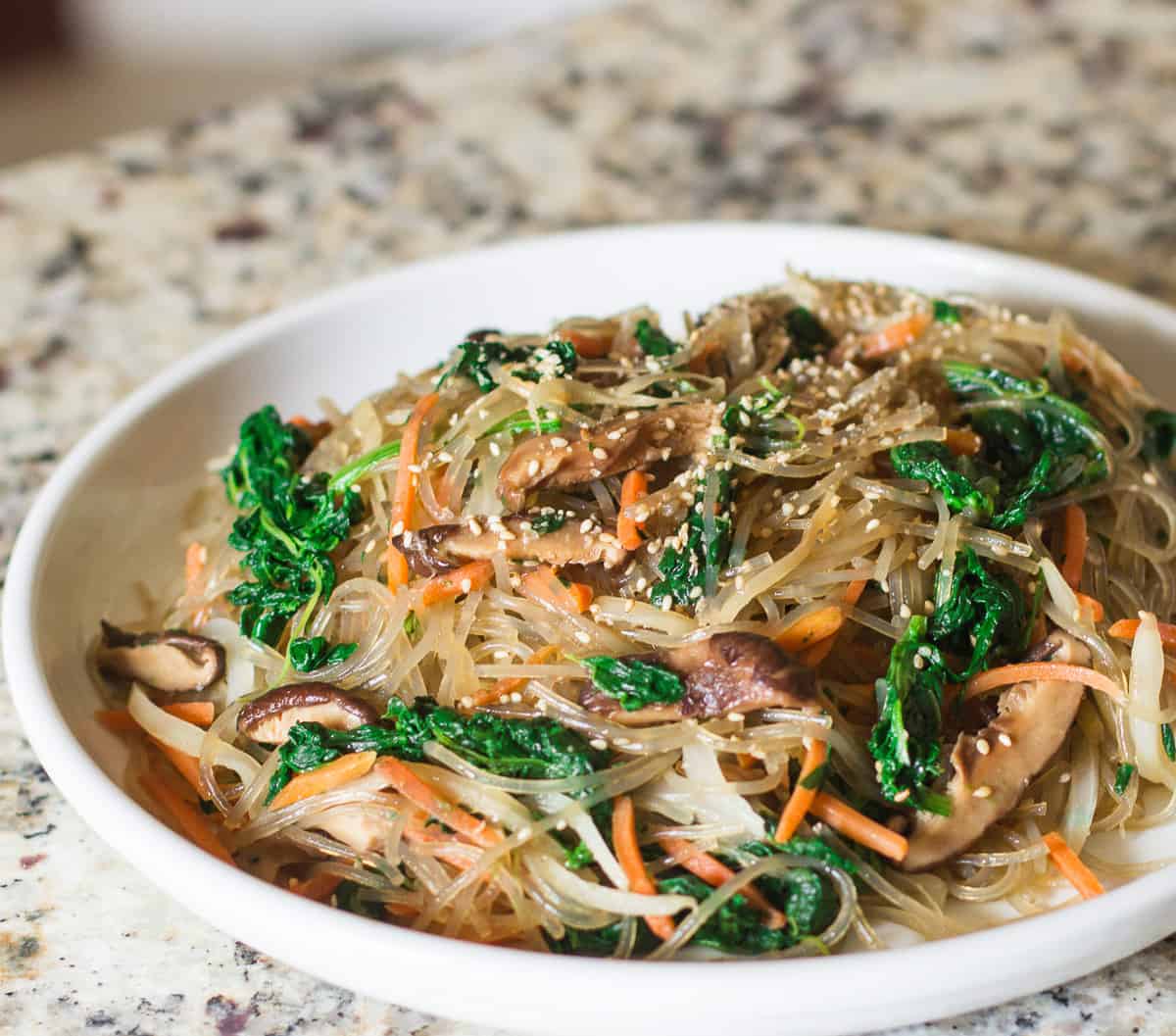
Japchae is a versatile dish that can be enjoyed warm, at room temperature, or cold!
Here are some suggestions:
- Main meal – enjoy with a side of kimchi.
- Side dish – pairs especially well with bulgogi, mandu (Korean dumplings), and vegetable pancakes.
- Bento Box – For a well-rounded meal on the go, you can include alongside other items like rice, protein, and additional vegetable sides. Here are more delicious bento box lunch ideas.
- Cold noodle salad – garnish with some fresh herbs like cilantro or green onion. Serve alongside miso tofu!
- Weeknight dinner – pair with this Korean ground beef and rice for a heartier meal.
Storage Suggestions
Transfer leftovers to an airtight container and refrigerate for 2-3 days. Reheat in a pan on the stovetop over medium heat. Add a splash of water to prevent the noodles from drying out and stir-fry until heated through.
You can also microwave. Note that reheated japchae will be slightly softer in texture compared to when freshly cooked. It will still be delicious though!
Vegetarian Japchae FAQs
Japchae is made with Korean sweet potato noodles, vegetables, and a savory-sweet soy-based sauce.
They are Korean glass noodles made from sweet potato starch, known for their chewy texture.
They were likely overcooked or sat too long in liquid. Cook just until chewy and toss with sauce right away.
More Korean Recipes


Did you make this recipe? Leave a rating below and let me know how you liked the recipe! Your feedback means so much to me!

Vegetarian Japchae
Want to remove ads? Join the Kidfriendly Meals Club >>
Ingredients
- 6 ounces dried Korean sweet potato vermicelli noodles, dangmyeon
- 1 teaspoon sesame oil
- 1 tablespoon neutral oil
- 1 small onion, sliced
- 1 carrot, peeled and shredded (I used a pre-shredded one)
- 6 dried shitake mushrooms, soaked in warm water and cut into matchstick strips
- 1 bunch of spinach
- 4 tablespoons low-sodium soy sauce
- 1 tablespoon oyster sauce (optional)
- 1 tablespoon brown sugar or maple syrup or honey
- 2 tablespoon sesame oil
- salt
- toasted sesame seeds
Instructions
- In a pot, bring water to a boil. Add spinach and cook for a few seconds, until the spinach has wilted. Remove immediately and rinse in cold water. Don't discard the water. You're going to use it for the noodles.Drain and gently squeeze out all the water from spinach. Form into a ball, then using scissors, cut it in half. Combine spinach with 1 teaspoon of sesame oil and pinch of salt. Set aside.
- Add noodles to the pot and and cook for 6-8 minutes until softened and chewy. It should NOT be al dente! Drain and rinse under cold water. Using scissors, cut the noodles into shorter lengths, about 8 inches. Toss with 1 teaspoon sesame oil and set aside.
- In a small bowl, mix soy sauce, sugar, and sesame oil together until sugar dissolves. Set aside.
- Heat 1 teaspoon of neutral oil in a large skillet over medium high heat. Add onion. Stir-fry for about 2 minutes, or until onion is slightly translucent. Remove from pan.
- In the same skillet, repeat the whole process with carrots and mushrooms.
- In a large mixing bowl, add the noodles and all the vegetables. Pour in the soy sauce mixture. Using your hands toss until all the ingredients are coated evenly with the sauce. Taste and season with salt, if needed. Add the toasted sesame seeds and a drizzle of sesame oil. Serve immediately.





Awesome! Easy to make it and super delicious!
Gamsahabnida! (That’s basically one of a handful of words in Korean I was taught as a kid, much to Halmeoni’s consternation…) I’ve only heard stories of my grandmother’s japchae, but never knew exactly what it was, or even what to look for. This helps put me in the right direction! Daedanhi gamsahabnida! Prosperous and blessed new year to you and your family!
Hi Lauren! You’re very welcome!! Love that you wrote to me in Korean ;). Yes, japchae is def one of the most iconic Korean dishes, and while the technique/method is the same, there’s always a subtle difference in taste depending on who makes it. That’s the mystery that is Korean cooking ;). It’s probably because people don’t really follow recipes…just eyeball everything. Hope you give this dish a try! 😉
Holy moly – I LOVE japchae (although I have to admit, I’ve only ever had it AT a restaurant). I need to come visit your mom so I can have hers;) I think the best recipes are the ones for which people don’t have a recipe written down – they’ve got the taste down pat that they know it can’t fail with a little variation here and there. Lucas and I are definitely going to make this ASAP! Happy belated NY!
Min, I love japchae!! This looks sooo good! one of my faves! My mom says the same thing. . and with all of her Korean food recipes . . they don’t measure anything!!! I guess it’s good that we have to figure it out on our own! 🙂 Happy Lunar New Year!! TGIF!
It must be hard being away from family at times like these…I hope this dish gave you the comfort you were looking for. It certainly sounds amazing!
This is by far my favorite Korean dish. At our local Korean restaurant it’s all I ever order. Thanks for the great recipe.
Happy New Year!
This is one of my all time favourite dishes- My friend Jae’s mum makes this and always gives me leftovers because I eat them by the bucketful…cold.
Pinned!
I LOVE Japchae! Happy New Year and I can’t wait to try your recipe.
Such a fun dish, and even better cooked in PJs!!! Love your mom’s advice too 🙂 Happy Lunar New Year to you and Hungryman!!
Thank you Min for the nice recipe.