

This post may contain affiliate links. Please see our disclosure policy for more details.
Last week, we talked about the basics of hormones and how to deal with stress in a positive way. Now we turn our focus to diet and nutrition. Today, it’s all about FATS. That’s right! The four letter word that evokes all kinds of fear and anxiety in so many people. With all the misconceptions and confusion surrounding it, it’s time to see and embrace it for what it is – an ESSENTIAL nutrient!
What purpose does fat serve?
As a macronutrient, meaning our body needs a lot of it, fat is essential for every cell in our body. Fat not only provides and stores energy, it also insulates and protects the body, aids in the absorption and transport of fat-soluble vitamins (vitamins A, D, E, K) and minerals, assists in the conversion of carotene to vitamin A, helps with inflammation…just to name a few.
Of course, fat adds flavor and texture, too. And because it is more energy-dense than the other major macronutrients, carbohydrates and proteins (9 calories/gram vs. 4 calories/gram), it also helps us feel full and satisfied. I suggest you do an experiment to test this. Compare your satiety level after consuming plain toast vs. toast with avocado. I bet you the latter will have more staying power and keep you fuller for a longer period. All this to say,
a healthy diet = a combination of carbohydrates, protein, AND fat!
How much fat should you consume?
The current recommendations are:
- Total calories from fat: 25-35%
- Saturated fat: < 7% of calories
- Trans fat: <1% of calories
However, remember that these are just guidelines. Eating a well-balanced diet is soo much more important than stressing over each gram of fat.
If there’s anything that you take away from this post, I hope it’s this:
Stop fearing fats!
If you or someone you know is a chronic dieter, most likely following one of those ever-so-popular low-fat or fat-free diets, chances are yours or their hormones are imbalanced. The reason being, fats are the building blocks of hormones.
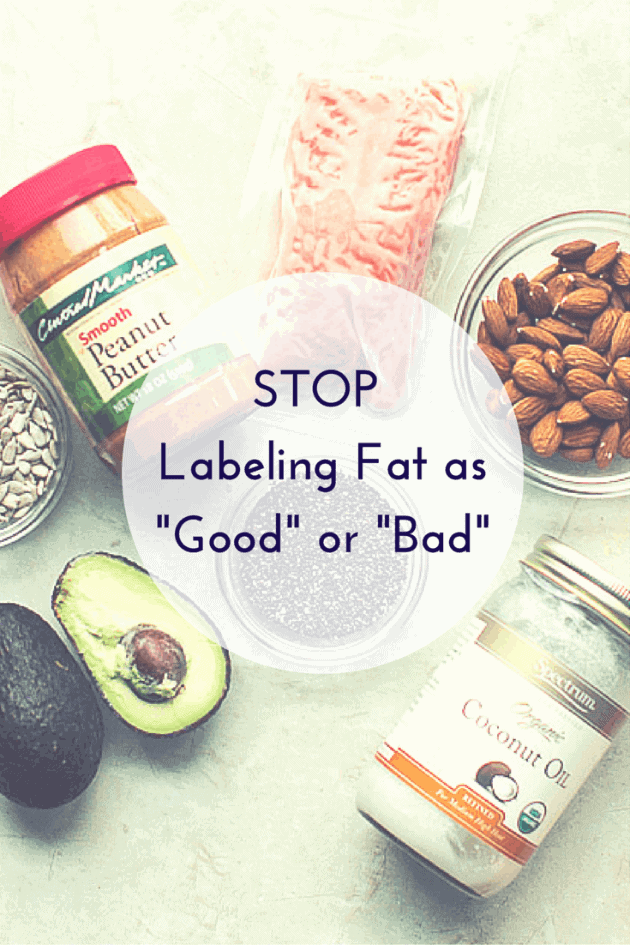
Our bodies need a wide variety of fats to work properly. Again, it’s all about consuming a “well-balanced” diet rather than pursuing a “perfect” diet, if that even exists. I’m completely against labeling certain foods as “good” or “bad.”
Here’s a good example of why:
I personally believe all the controversy over fats began with labeling them – saturated fats = “bad”, polyunsaturated fats = “good.” Because what did this do? The majority of the saturated fats in our diet has been replaced with polyunsaturated fats, primarily in the form of vegetable oils derived from soy, corn, canola, and safflower.
So what’s the problem with this?
Well, let’s first talk about saturated fats…
- Mostly solid at room temperature
- Major sources:
- Red meat
- Whole fat dairy products (milk, cream, butter, cheese, ice cream)
- Palm and coconut oil
- Commercially prepared baked goods
As I’m sure you’ve heard, yes, they may clog your arteries, increase the risk of cardiovascular disease (although the studies show a lack of evidence to conclude such correlation), etc. However, so can replacing saturated fats with refined carbohydrates or processed vegetable oil, which is what’s been happening. You see, this is where the problem lies. In an effort to eliminate saturated fats, highly processed low-fat products (filled with sugar and preservatives) and vegetable oils began to be produced and consumed in enormous quantities. Unfortunately, such a shift may actually be more detrimental to our health than the saturated fat itself.
You have to remember that saturated fats also play an important role in our bodies. For instance, they make up at least 50% of cell membranes, help keep our bones strong, enhance the immune system, and possess antimicrobial properties.
The suggestion says limit, not eliminate!
Now let’s talk about the so-called “good” fats –
Monounsaturated and polyunsaturated fats…
- Liquid at room temperature
- Major sources:
- Vegetable oils – canola, soybean, olive, etc.
- Avocado
- Nuts
- Fish
- Flax seeds, Chia seeds
Omega-3 and omega-6 (PUFAs) are essential fatty acids, meaning our bodies cannot make them and thus must be obtained from our diet. They both have distinct biological functions and offer unique health benefits and are essential for normal growth and development.
They are considered “good” because they have been shown to reduce blood cholesterol levels and lower the risk of heart disease.
BUT, the problem is that we are consuming way too much omega-6 fats in the form of highly processed vegetable oils stripped of their original nutrients in respect to omega-3. As mentioned earlier, the low-fat craze and the replacement of animal fat with vegetable fat may be partially to blame. The recommended ratio of omega-6 to omega-3 is 2:1-4:1 (to put this into perspective, the modern Western dietary ratio is nearly 20:1).
The issue with omega-6 is that it contributes to inflammation in the body, which is a contributing factor for many chronic diseases, including cardiovascular disease. Additionally, PUFAs are highly unstable and prone to oxidation in the presence of heat, oxygen, and moisture. Rancid oils produce free radicals, which are extremely reactive chemically and can wreak havoc on your body. For instance, they can damage your tissues, organs, blood vessels, etc.
One of the ways you can prevent oil rancidity is to be aware of its smoke point. My fellow dietitian, Anne from Fannetastic Food wrote a comprehensive post on which oils to use for cooking, baking, roasting, etc., so be sure to check it out!
[Tweet “Stop labeling fat as “good” or “bad” #nnm #RDchat #nutrition @mjandhungryman”]
All this to say:
- Stop labeling fats as “good” or “bad”
- If you use vegetable oil in salads, throw in some salmon or flaxseeds to balance those omega-3s and omega-6s.
- Go ahead and have that butter on your toast instead of highly processed margarine. Eat REAL foods.
- If you are cutting back on red meat or dairy products in an effort to limit (not eliminate) the intake of saturated fats, then replace them with other real, high-quality fats found in other foods. For instance, choose fatty fish, nuts and seeds, and avocados, instead of highly processed, low-fat products, refined carbohydrates, or commercial vegetable oils.
- There is a fat you DO want to avoid – trans-fats. They are made through a process call hydrogenation, in which a liquid oil is converted to one that is solid at room temperature to make it more stable (e.g. margarine). So avoid products that contain “hydrogenated” or “partially hydrogenated” in the ingredient list. But you won’t have to worry bc you’ll be nourishing your body with REAL foods, right? 😉
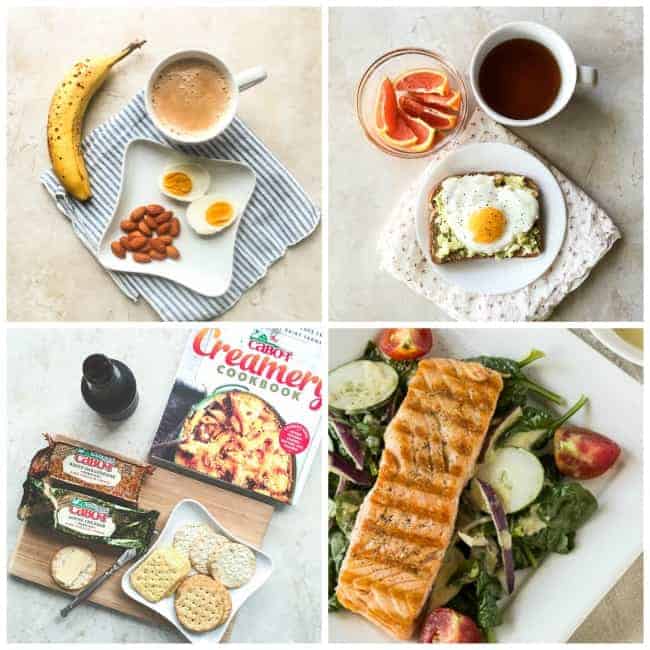
Now, I intentionally choose to eat and enjoy full-fat cheese, avocado toast with a fried egg on top, bananas with generous amounts of nut butter, full-fat ice cream… I always feel satisfied afterward, and guess what? I haven’t gained weight, and my cycle is still very regular. So stop fearing and stressing over fats, because not only is it pointless, but you can kiss hormonal balance goodbye with all that stress.
So when it comes down to it, it’s all about eating (one more time for good measure) a well-balanced diet. Instead of labeling fats as “good” or “bad” focus on eating unprocessed, whole foods fat and all. But remember, even foods that are super good for you can be harmful if consumed in excess.





I can not tell you how often I emphasize the importance of eating fat! I have been down the “avoid fat” path a few years ago, only eating non-fat/low fat products, avoiding oils, etc. because of the fear, only leading to amenorrhea (a couple of times) myself and knowing the exact cause of it all. Thank you for linking back to your beautiful post from the past – I have struggled with very similar issues. I am now eating more fat than ever and loving every minute of it (in moderation, of course) 😉
Thank you so much, Alanna, for sharing your personal struggles with me as well. So glad to see both of us on the other side 😉
Great post Min. Well laid out and easy to comprehend nutrition info on a highly contested topic. Well done!
I have pretty much decided that anything is good to eat in moderation and the less processed, the better. All the things they do to food to try to make it healthier just makes people think they can eat more of it, i think.
And the so-called “healthier” products leave you feeling so unsatisfied!
It’s interesting because I just wrote an article on the new proposed Nutrition Facts label. The FDA feels like the same way as you so they are taking “Calories from Fat” off the new labels. It’s a small victory!
Love this so much. I love that fat is is being redeemed. I’ve started buying full fat sour cream, cottage cheese, etc… as well. I think that if everyone eats real foods in moderation that we’d be much better off!
The struggle is real. Thanks for the informative info 😀
I agree with this 100%! Fats are essential for healthy living! They need not to be feared!! especially avocado and peanut butter! 🙂 Great post!
wonderfully written post! I’m definitely pinning this for future reference!
amen! there is so much misconception about fat free and low fat stuff but at the end of the day, they are all chemical junk. It is little difficult to practice in a hospital setting because we are kind of required to only allow low fat products to our patients which makes sense but at the same time, it does not. i used to preach all things fat free and sugar free as well but in reality those things taste really nasty – #whatwasithinking
I remember having to do that during my internship. And agreed! They are so so unappetizing..
Min, I found this post super informative and helpful! It’s good to know that so many yummy foods (avocado, peanut butter, cheese, ice cream) are actually vital to have in our diet. (in moderation) Also, I love the shots of your regular breakfasts and lunches–it’s good to have some everyday inspiration!
I’m glad you found this helpful, Trisha! And absolutely! All those foods you’ve listed are not the villains ;).