

This post may contain affiliate links. Please see our disclosure policy for more details.
This coconut mango pudding is one of those recipes that looks fancy but is secretly so easy. Just 3 ingredients, a quick prep, and you’ve got a creamy, fruity treat that’s always a hit—especially with the kids.
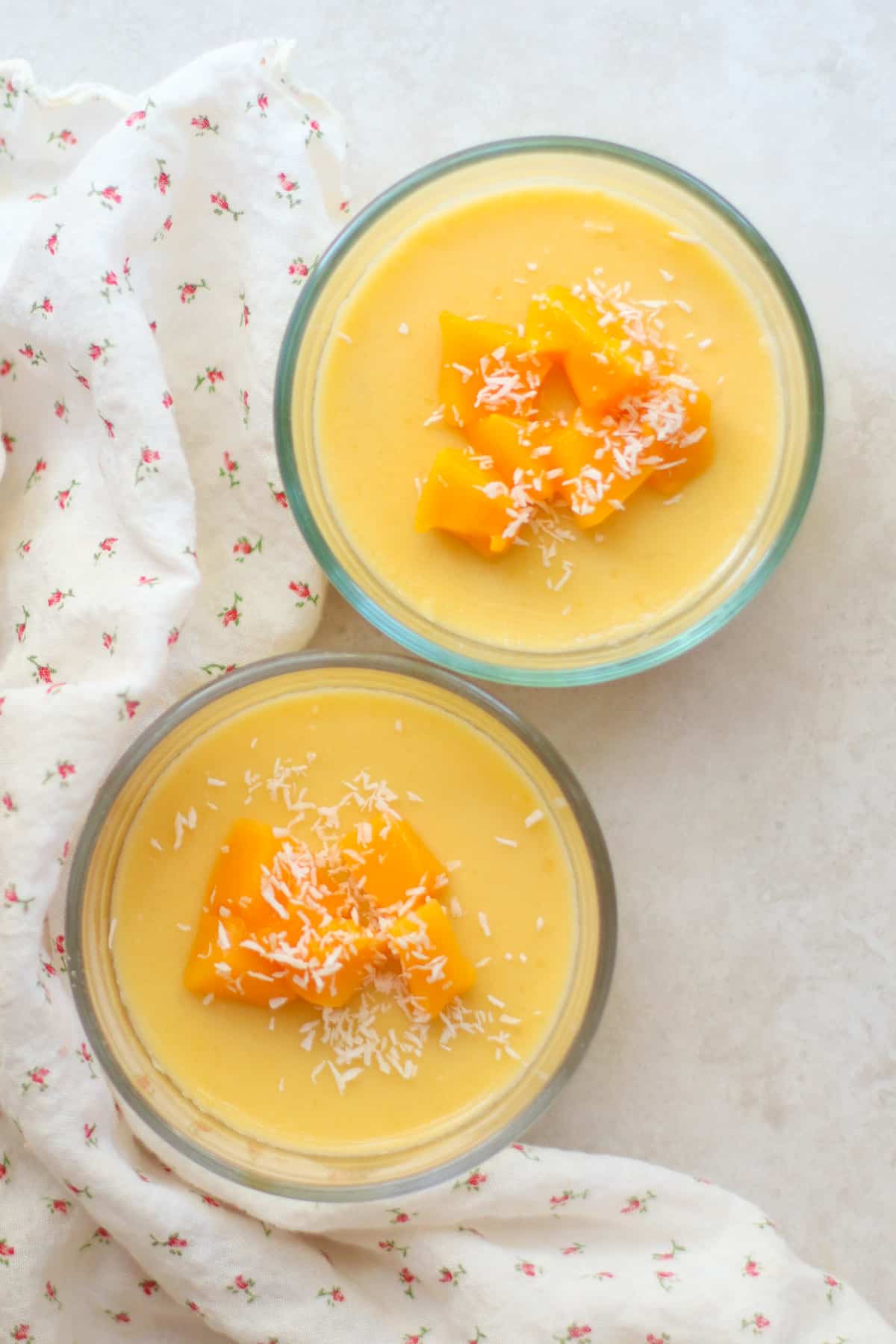
What is a Mango Pudding?
Table of Contents
Mango coconut pudding is a well-loved dessert across Asia, especially in Hong Kong. It likely came about during the British colonial era, when local flavors and Western traditions started blending in delicious ways.
Even though it’s called pudding, it’s more like a soft custard — smooth, creamy, and just firm enough to hold its shape. It’s usually served chilled in little cups or ramekins, perfect for scooping and slicing.
It’s one of my favorite desserts to get at dim sum, though it’s been a long time since we’ve gone — taking two little ones out to eat is its own kind of adventure (maybe you can relate)! So now, I make it at home — and honestly, it’s been such a cozy little treat to have in the fridge.
What I love most is how simple it is. Just 3 ingredients, no baking, and barely any prep. It feels a little fancy, but it’s so easy and low-stress.
Why it’s worth making:
- Works with frozen mango — just thaw it.
- Dairy-free, gluten-free, and no added sugar if your mango’s ripe.
- Chill it ahead of time and it’s ready when you are.
- Great for kids, snack for toddlers, or a quiet moment after bedtime.
If you’re into mango everything like I am, you might also love mango popsicles , mango shake, or healthy homemade gummies!
But this pudding? It’s the one I keep coming back to because it’s comforting, simple, and just the right amount of sweet.
For even more easy, wholesome treats, check out reader-favorite no bake treats, full of simple, healthy ideas that kids and adults will love.
Ingredients
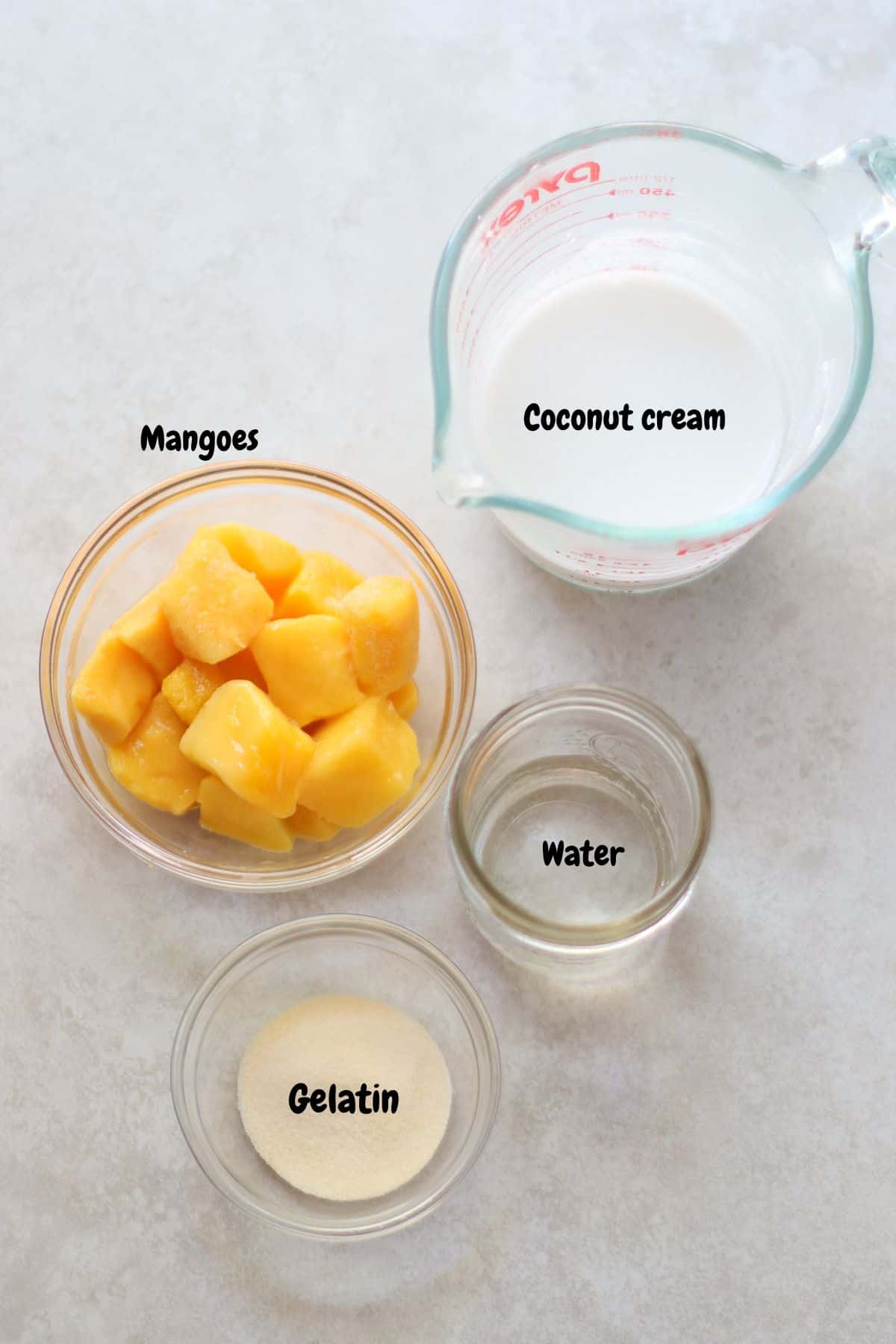
I am highlighting just the ones that need further explanation. The complete list is in the recipe card below.
- Fresh mangoes – I recommend alphonso, ataulfo, or manila mangoes, if available, as they are super sweet and have a smooth, non-fibrous texture. You can also use mango pulp.
- Coconut cream – this provides incredibly creamy and rich texture. You can also use evaporated milk or condensed milk. While canned coconut milk will work, your pudding won’t be as creamy.
- Gelatin powder – I like to use this grass-fed beef gelatin. I’ve been consuming it on a regular basis in hopes of improving my digestive health and skin. But feel free to use your favorite gelatin.
Related: How to serve mango to babies
Step-by-Step Instructions

Step 1: In a large mixing bowl, add COLD water and stir in the gelatin. This will allow the powder to “bloom” and soften. It will thicken into a gel.

Step 2: Add ripe mango chunks and coconut milk into a high-speed blender and blend until smooth.

Step 3: Heat a small saucepan over medium-low heat. Add the mango milk mixture and bring to a gentle simmer for about 2 minutes.

Step 4: Pour over the bloomed gelatin and stir until the gelatin completely dissolves. Cool for a few minutes. Pour into individual serving bowls and refrigerate for at least 2 hours until set. Enjoy plain or top with fresh mangoes, coconut flakes, a dollop or whipped cream, or a light drizzle of condensed milk.
Recipe Tips
- Use fresh ripe mangoes, if possible, for best flavor. Here’s how to pick the perfect mango from the store. You can use frozen mangoes, just be sure to thaw first.
- Depending on your blender, you may need to strain the mango puree in a fine-mesh strainer to remove any fibrous, stringy bits.
- Cold water is key for blooming gelatin: Make sure the water is cold—not warm—when you mix in the gelatin, or it won’t set properly.
- Don’t skip the simmer: Heating the mango-coconut mixture helps dissolve the gelatin later, but avoid boiling—it just needs a gentle simmer.
- Stir well after adding gelatin: Keep stirring until there are no clumps or streaks. You want everything smooth and fully combined for a creamy texture.
- Cool briefly before chilling: Let the mixture cool slightly before pouring into bowls so you don’t create condensation in the fridge (which can lead to a watery top).
- Follow the recipe as is first, and if you desire a slightly softer and more delicate texture, use less gelatin the next time.
Variations
While the classic version is hard to beat, there are plenty of easy ways to switch things up depending on what you have on hand or the flavor you’re going for.
- Vegan version – Use agar-agar instead of gelatin. Start with 1 teaspoon, heat it with the mango-coconut blend, and follow the same chilling steps.
- Citrus boost – Add a splash of lime or orange juice for a little tang.
- Fruit twist – Swap mango for pineapple or papaya, or mix in a spoonful of passion fruit for extra punch.
- Sweeten it up – If your mango isn’t quite sweet enough, a touch of honey or maple syrup works great.
Serving Suggestions
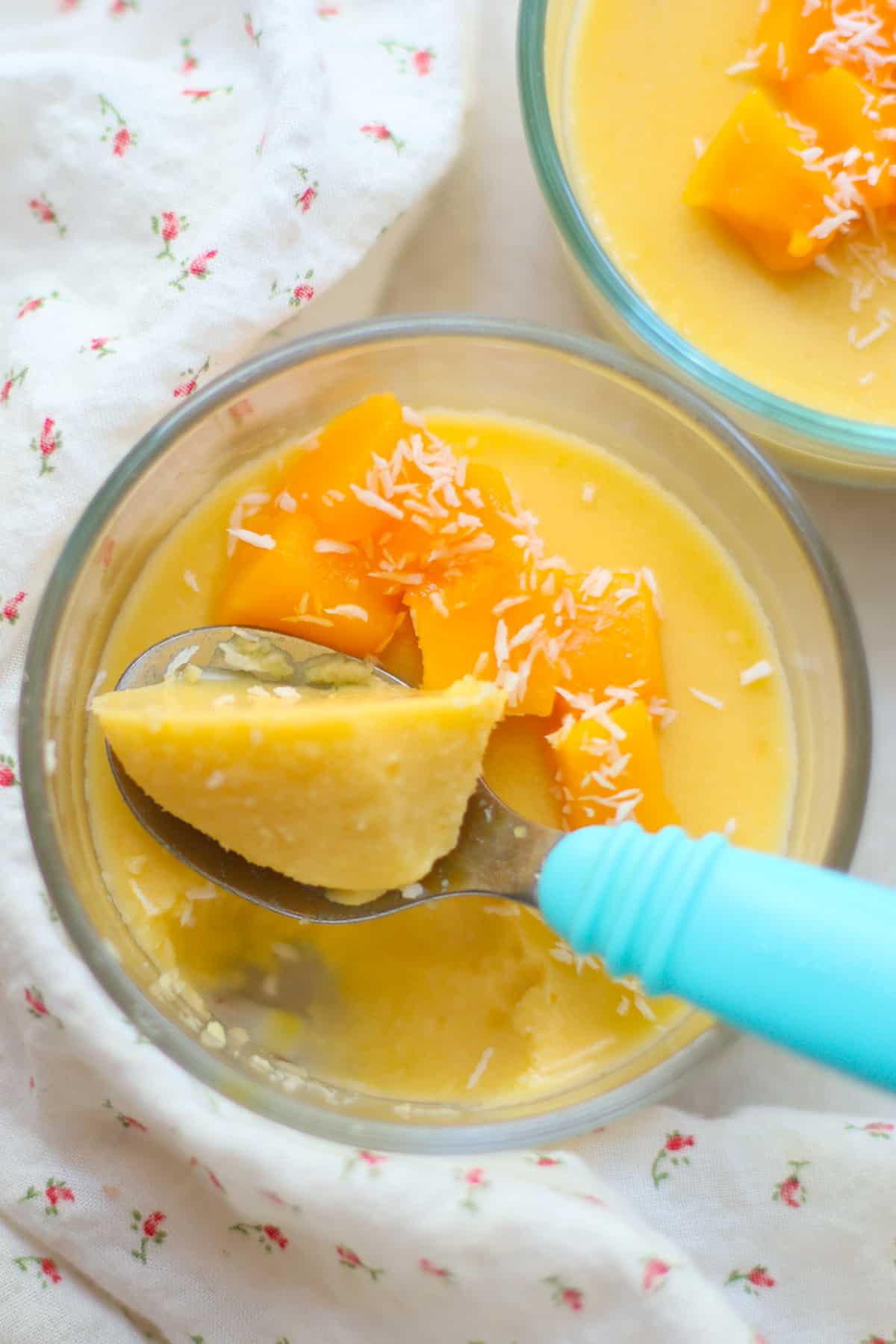
Once your pudding is set and ready, the fun part begins — serving it up in a way that looks just as good as it tastes.
- Garnish with fresh mango chunks, coconut flakes, or a mint sprig.
- For a fancier touch, top with a layer of fruit jelly or a drizzle of coconut milk.
- Or layer with granola for a tropical breakfast-style parfait.
Storage
Refrigerate in an airtight container for 2-3 days for best flavor and texture. The longer it sits in the fridge, the more its texture may change.
I wouldn’t freeze this as the gelatin may not set as well upon thawing.
Frequently Asked Questions
Look for agar-agar powder which is a plant-based ingredient derived from seaweed and acts as a natural gelling agent. It does have different gelling properties compared to gelatin and typically, you will need less agar agar than gelatin.
You can but look for ones without any added sugars or preservatives and substitute an equal amount.
Did you make this recipe? Leave a rating below and let me know how you liked the recipe! Your feedback means so much to me!

Coconut Mango Pudding
Ingredients
- 1 cup Mango (160g), fresh or frozen (thawed) mango
- 3/4 cup Coconut Cream
- 1/4 cup cold water
- 2 teaspoons gelatin
Instructions
- In a medium bowl, combine gelatin and cold water in a bowl. Let it sit for 10 minutes.
- In the meantime, blend mango and coconut cream. Add to a small saucepan and heat on medium heat the puree for 2 minutes until warmed
- Pour into the gelatin mixture and whisk until thoroughly combined and smooth.
- Refrigerate for at least 2 hours.




Oh I see details now – can use milk but texture will be different. I used cream and an waiting for mine to set in the fridge now!
Uh oh, ingredients say coconut cream and instructions say coconut milk. Is there a difference?
Eeks!! thank you for bringing that to my attention! You’ll need coconut cream for this one!