

This post may contain affiliate links. Please see our disclosure policy for more details.
There was a season when I felt like I was constantly failing at dinner.
One child was hungry way earlier than I expected.
The other wasn’t ready to eat yet.
I was in the middle of finishing work, thinking about pickup, or just trying to get through the afternoon.
And I kept thinking…
Why does this feel so hard?

Looking back, I’m really glad I gave myself permission to stop chasing the “ideal” dinner and start doing what actually worked for our family.
Because here’s something I don’t think we talk about enough.
We don’t just need more recipes!
In fact, we have SO many recipes at our fingertips that figuring out what to make can become another source of mental load. But that’s a conversation for another day. 😂
What we really need are real-life strategies for feeding our kids in the middle of everything else going on.
The work schedules. The activities. The unpredictable naps. The child who’s suddenly STARVING at 4:15 p.m. when dinner isn’t even close to being ready.
And the truth is, there’s no single dinner routine that’s going to work for every family, every day, or even every season.
So rather than giving you another set of rules to follow, I want to share some practical ways to make dinner feel a little less overwhelming.
My hope is that you’ll find ONE strategy that works for your family and run with it. Use it for as long as you need!
Table of Contents
- Does Dinner Really Need to Happen at 4 or 5 p.m.?
- 1. Let Go of the Idea That Dinner Has to Happen Once
- 2. If Your Child Is Starving Before Dinner, Feed Them!
- 3. Think in Building Blocks, Not Full Recipes
- 4. Use Leftovers on Purpose
- 5. Have a Few “No-Thinking” Meals Ready to Go
- 6. Give Each Night a Theme to Take Away the Guesswork
- 7. It’s Okay If Everyone Eats at Different Times
- 8. Keep the Routine Predictable, Even When the Clock Isn’t
- And Maybe Most Importantly…
Does Dinner Really Need to Happen at 4 or 5 p.m.?
Have you seen those social media posts suggesting that the solution to dinner chaos is simply to feed your kids at 4 p.m. because that’s when they’re naturally hungrier?
And I get where this advice is coming from!
Some young children really ARE hungrier and more willing to eat earlier in the evening, especially if they had an early lunch or are exhausted by dinnertime.
But here’s the thing.
There isn’t one magical dinner time that’s best for every child.
A child’s appetite is influenced by when they last ate, how much they ate, their activity level, growth, sleep, and daily routine.
And what’s often missing from that 4 p.m. dinner advice is everything happening AROUND that time.
Most families are:
- Wrapping up work or heading to daycare pickup
- Driving to sports, lessons, or other activities
- Managing naps, meltdowns, and sibling disagreements
- Just trying to get through the afternoon 🫠
So even if 4 or 5 p.m. sounds wonderful in theory, it doesn’t always fit into real life.
And even when it does? Kids are still kids!
They might eat a wonderful dinner at 4 p.m. and be hungry again before bedtime.
Young children have relatively small stomachs and need regular opportunities to eat throughout the day.
Rather than chasing the perfect dinner time, I encourage you to focus on something much more realistic: a flexible routine with predictable opportunities to eat.
Here’s what that can look like.
1. Let Go of the Idea That Dinner Has to Happen Once
Who decided dinner has to be one big meal at 6 p.m. anyway?
Some days, it might make more sense to offer an earlier, more substantial meal followed by something simple later.
For example:
4:30 p.m. — Early dinner: Chicken, rice, and roasted vegetables.
7:00 p.m. — Bedtime snack: Yogurt with fruit, toast with nut butter, or cheese and crackers.
And no, this doesn’t mean preparing TWO dinners!
Think of the later eating opportunity as a planned snack to help bridge the gap until breakfast.
But what if my child barely eats dinner and then asks for a snack?
This is where a little structure makes a difference.
There’s an important distinction between offering a predictable bedtime snack and preparing an entirely new meal because your child refused dinner.
If a bedtime snack works for your family, offer it consistently, regardless of how much your child ate at dinner.
Keep it simple, satisfying, and predictable so it doesn’t become a reward for skipping dinner.
Pediatric Dietitian Tip: A helpful starting point for many toddlers and preschoolers is three meals and two to three planned snacks each day, generally spaced about two to three hours apart. This isn’t a rigid rule! Adjust based on your child’s age, appetite, and schedule.
The goal is to offer enough opportunities to eat while allowing children to develop an appetite between meals.
2. If Your Child Is Starving Before Dinner, Feed Them!
It’s 4:45 p.m. You’re trying to finish dinner, and your toddler is hanging onto your leg, asking for food every 30 seconds.
Sound familiar?
Sometimes we become so focused on making sure our kids are hungry FOR dinner that we forget they’re telling us they’re hungry RIGHT NOW.
And while structure around meals and snacks is helpful, we don’t need to make children push through genuine hunger just to protect their dinner appetite.
Here are three things you can try:
Move dinner earlier. If your child consistently gets hungry at 4:30 p.m. and your schedule allows it, serve dinner then!
Offer a mini meal. If dinner won’t be ready for another hour or two, offer something satisfying, like cheese, crackers, and fruit; scrambled eggs and toast; or yogurt with oats and berries.
Serve part of dinner early. This is one of my favorites because it doesn’t require making anything extra! If the chicken, rice, or roasted vegetables are ready, go ahead and offer some.
And yes, your child might eat less at the later meal.
That’s okay!
Being overly hungry AND tired can actually make mealtimes harder for some children.
3. Think in Building Blocks, Not Full Recipes
I love creating recipes. Obviously!
But as a mom, I also know there are plenty of evenings when the LAST thing I want to do is follow one.
Instead of asking, What recipe am I going to make tonight?
Ask, What do I already have that I can put together?
Think of three basic building blocks:
- Protein and/or iron-rich food: Eggs, chicken, beans, tofu, fish, or lentils.
- Carbohydrate: Rice, pasta, potatoes, tortillas, or bread.
- Fruit or vegetable: Whatever is available! Fresh, frozen, canned, or leftover.
Add some fat for flavor, satisfaction, and energy, and you have the foundation for a meal.
A few examples:
- Scrambled eggs + toast + berries
- Rice + canned salmon + avocado
- Beans + cheese + tortilla + sliced fruit
- Pasta + pesto + peas
- Rotisserie chicken + microwaveable rice + frozen broccoli
Are these elaborate dinners? Absolutely not.
But they’re nourishing, practical, and easy to pull together.
And please don’t underestimate convenience foods! Frozen vegetables, canned beans, pre-cooked rice, jarred sauces, and rotisserie chicken can all be part of a nutritious family meal.
Pediatric Dietitian Tip: You don’t need every meal to contain every food group or nutrient. Children’s intake naturally varies from meal to meal. Looking at variety and overall intake across several days is often much more helpful than analyzing one dinner.
4. Use Leftovers on Purpose
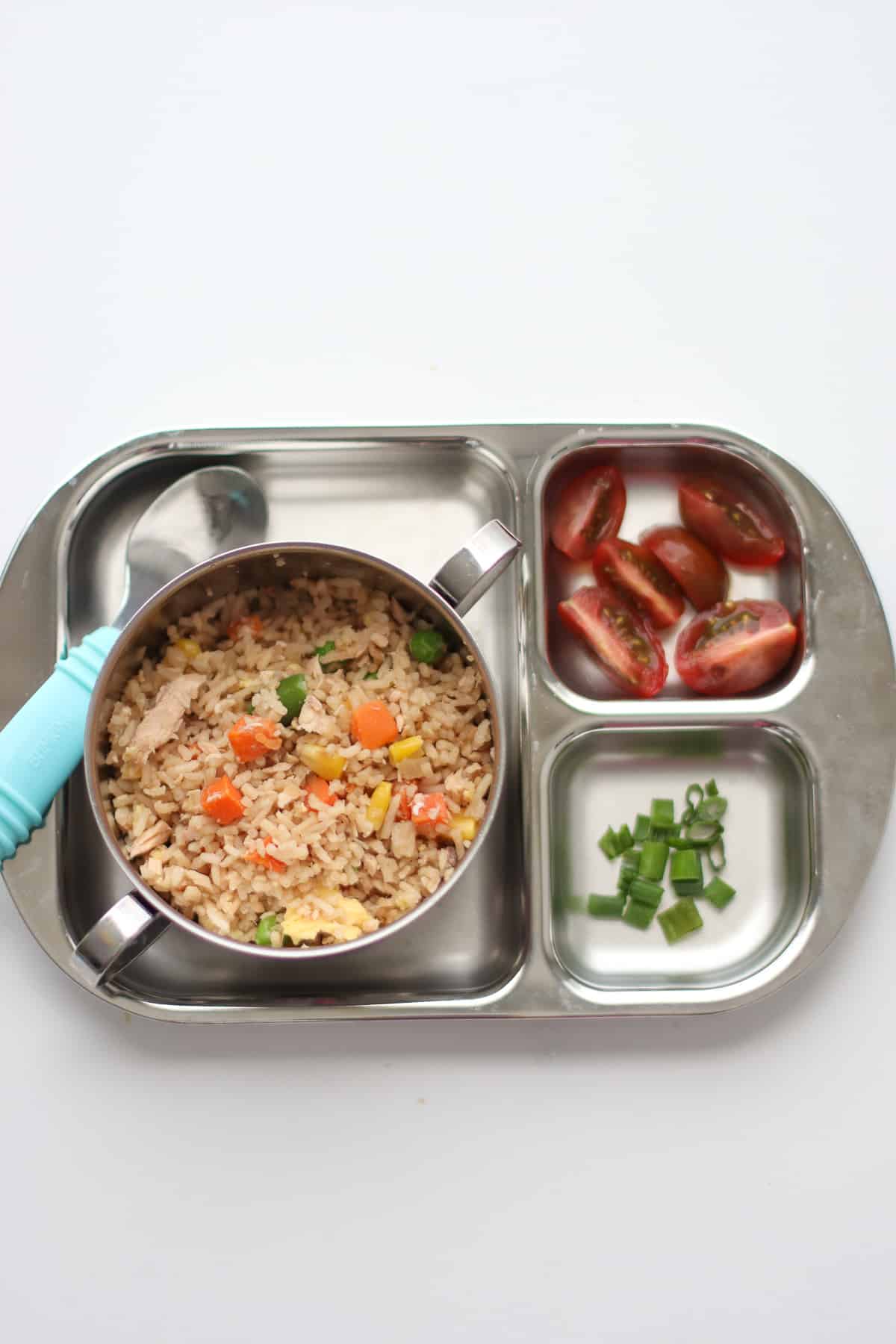
This is one of the biggest shifts that has made feeding my family easier.
Instead of thinking about leftovers as food we have to finish, I like to think of them as ingredients for another meal.
For example:
- Extra rice becomes easy vegetable fried rice.
- Leftover chicken becomes wraps, pinwheel sandwiches, southwest chicken salad, or quesadillas.
- Roasted vegetables get tossed into pasta, scrambled eggs, or soup.
- Ground beef becomes tacos one night and pasta sauce another.
- Extra beans become a quick bean-and-cheese quesadilla.
You’re not starting from scratch. You’re just giving something you already made a new purpose.
And here’s another little trick: When you’re already cooking something that freezes well, make extra on purpose.
Cook a bigger batch of shredded chicken, meatballs, or rice and freeze the extras in family-sized portions.
Future you will be very grateful!
Just remember to refrigerate perishable leftovers promptly and use refrigerated leftovers within three to four days.
5. Have a Few “No-Thinking” Meals Ready to Go
I think every family needs a short list of meals they can make without a recipe, a grocery run, or much mental effort.
Because some days we’ve already made approximately a million decisions before 5 p.m. 😅
Here are some of our favorites:
- Eggs and toast with fruit
- Cheesy rice with peas
- Simple pasta like creamy broccoli pasta
- Rotisserie chicken, frozen vegetables, and tortillas
- Pesto pasta with store-bought pesto
- A snack tray with random leftovers from the fridge
That last one is ALWAYS a win at our house!
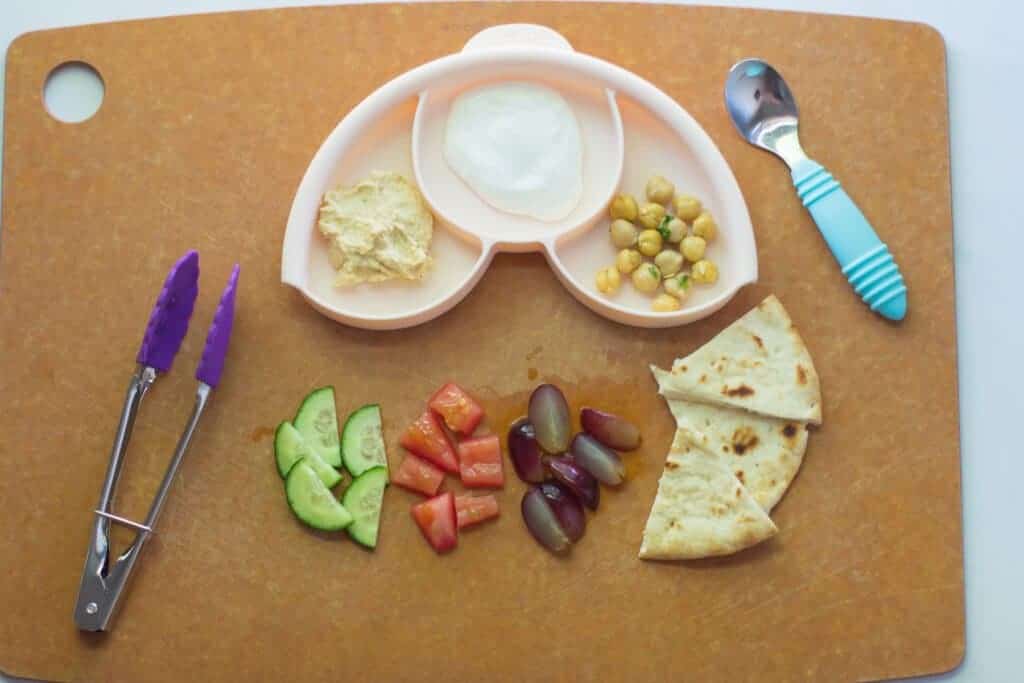
A little hodgepodge of whatever we have, served together on a plate or tray. It’s such an easy way to reduce food waste too.
These aren’t emergency backup meals. They’re real meals that deserve a place in your regular rotation.
You don’t have to cook something new and exciting every single night.
6. Give Each Night a Theme to Take Away the Guesswork
Here’s another strategy I LOVE, especially when the week feels completely unpredictable.
Instead of deciding from scratch what to make every single day, give each night a loose theme.
For example:
- Monday: Pasta night
- Tuesday: Taco or Tex-Mex night
- Wednesday: Leftovers
- Thursday: Kid’s choice
- Friday: Pizza or takeout night
The themes stay familiar, but the recipes can change.
And here’s why I love this approach so much.
It reduces the number of decisions you have to make while still giving your family opportunities to experience different foods.
Kids often appreciate knowing what to expect, and honestly, so do we!
Of course, this isn’t another schedule you HAVE to follow.
If Tuesday turns into leftovers night because life happened, great!
Think of it as a framework, not a rule.
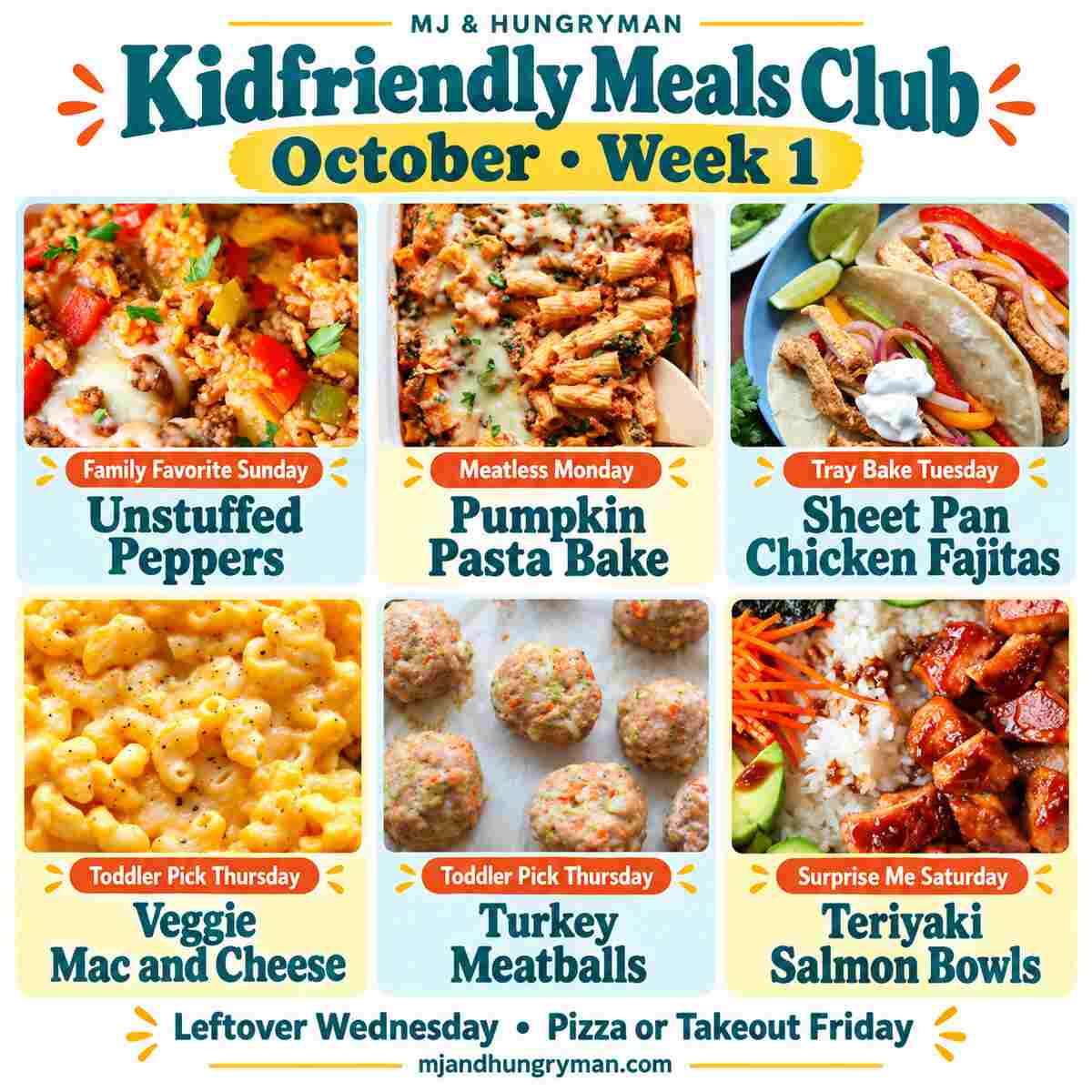
This is actually the approach I use in my weekly family meal plans.
Each week follows a familiar rhythm with five simple, family-friendly dinners and an organized grocery list. You can make them all, choose a few, swap days around, or repeat your favorites.
The goal isn’t to follow a meal plan perfectly. It’s to take some of the mental load out of feeding your family!
7. It’s Okay If Everyone Eats at Different Times
This one can feel uncomfortable at first.
Especially when we’ve heard over and over how important family dinners are.
And yes, there’s research supporting the benefits of shared family meals!
Studies have found associations between more frequent family meals and better dietary quality and family connectedness.
But here’s an important distinction.
That doesn’t mean every family needs to sit together at 6 p.m., seven nights a week, to raise healthy eaters.
Much of the research is observational, so we can’t say that family dinners alone cause those positive outcomes.
What matters is the bigger picture, including the routines, relationships, and mealtime environment you’re creating.
Maybe one child eats earlier because they have soccer.
Maybe your toddler eats before your spouse gets home.
Maybe you eat later because that’s the only time you can sit down without being interrupted.
You can still build connection throughout the day!
Sit with your child for a few minutes while they eat. Share breakfast together. Have a snack and chat after school. Or make weekend meals your family’s special time to slow down.
Family connection isn’t limited to the dinner table.
And if you can regularly share a meal together, wonderful! Keep doing that.
But if your current season doesn’t allow it, please don’t add another layer of guilt to your already full plate.
8. Keep the Routine Predictable, Even When the Clock Isn’t
Here’s something I really want to emphasize.
Flexible doesn’t have to mean completely unpredictable.
Children generally do well with routines, and predictable eating opportunities can help them learn to recognize and respond to hunger and fullness.
But that doesn’t mean every meal needs to happen at exactly the same time.
Instead, create a loose rhythm around the day.
Breakfast after waking up. A morning snack. Lunch. An afternoon snack. Dinner when it works for your family. And a bedtime snack if needed.
On activity nights, dinner might be earlier. On slower evenings, it might be later.
The schedule can change while the overall pattern stays familiar.
This also connects to one of my favorite feeding principles:
Parents decide what, when, and where food is offered. Children decide whether and how much to eat from what’s offered.
That means our job isn’t to convince our kids to eat a certain amount just because it’s dinnertime.
Our job is to provide regular, nourishing eating opportunities and let them listen to their bodies.
And if your child barely touches dinner?
Remember that appetite naturally fluctuates. Some days they’ll eat more at breakfast and lunch and have little interest in dinner.
Continue offering familiar foods alongside variety, keep portions manageable, and avoid pressuring them to eat.
If your child is consistently eating very little, losing weight, or struggling with growth or feeding, that’s worth discussing with their healthcare provider.
And Maybe Most Importantly…
Dinner doesn’t have to look a certain way to be “right.”
It doesn’t have to happen at the perfect time.
It doesn’t have to be a beautifully plated meal.
It doesn’t have to mean everyone sits down together every single night.
And it definitely doesn’t have to involve a brand-new recipe every day.
There will be seasons when family dinners feel easy and natural.
And there will be seasons when everyone is running in different directions and you’re just trying to make sure everyone gets fed.
Both are part of family life.
What matters isn’t creating the perfect dinner routine. It’s creating one that supports your family’s needs without adding unnecessary stress.
Keep offering nourishing foods.
Create some predictability where you can.
Stay responsive to your child’s hunger and fullness.
And give yourself permission to change the plan when life changes.
Because feeding kids isn’t just about what we make.
It’s about figuring out how to make it work in real life.
And that’s something I think we need to talk about a whole lot more. ❤️
You’re doing awesome!
Your mom friend,
Min