
This post may contain affiliate links. Please see our disclosure policy for more details.
The KidFriendly Meals Club is here to make feeding your family feel simpler. As a pediatric dietitian, I’ll help quiet the noise, break down what really matters, debunk the myths, and take some of those nutrition worries off your plate.
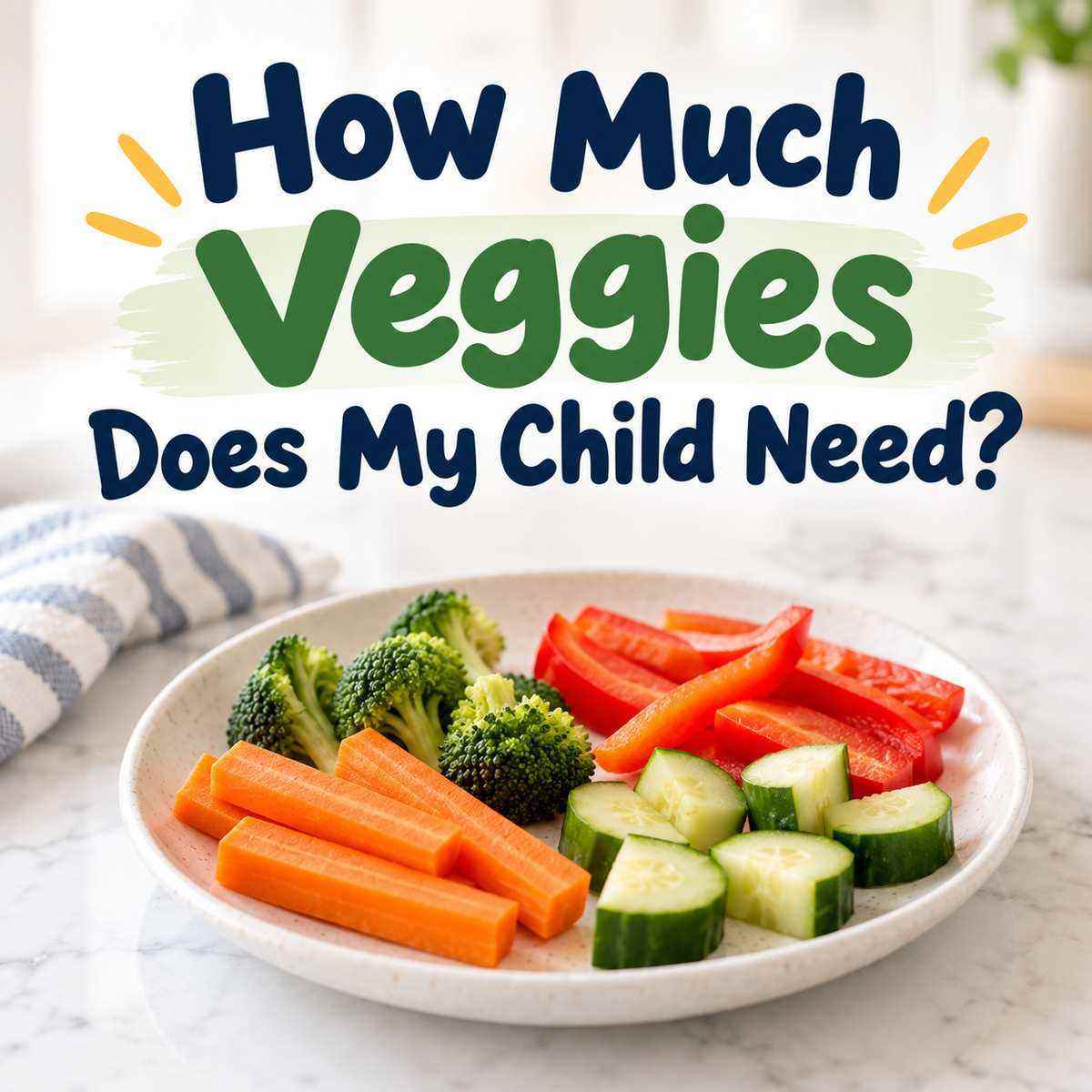
If getting your child to eat vegetables feels like a daily struggle, you’re definitely not alone! 🥦
Maybe you’re serving a generous helping of broccoli only to watch it go untouched. Or perhaps you’re offering two tiny pieces of carrots and wondering, Does that even count?
As a pediatric dietitian, I want you to know that vegetable portions don’t need to be huge to make a difference. And perhaps more importantly, your job isn’t to make sure your child finishes every vegetable on their plate.
Let’s talk about how much kids actually need, what realistic portions look like, and how to encourage vegetable intake without turning mealtimes into a battle.
Recommended Serving Size
A helpful starting point is to offer vegetables 2–3 times throughout the day. And here’s the great part: you don’t have to start with a huge serving!
🥦 A simple guideline is 1 tablespoon of vegetables per year of age, per serving.
That means:
- 1-year-old: Start with 1 tablespoon
- 2-year-old: Start with 2 tablespoons
- 3-year-old: Start with 3 tablespoons
- 4-year-old: Start with 4 tablespoons (¼ cup)
Keep in mind that these are suggested starting portions, not strict limits or official daily requirements.
For a 2-year-old, here’s what three small opportunities to eat vegetables might look like:
- 🥕 2 tablespoons of steamed carrots at lunch
- 🫑 2 tablespoons of finely chopped bell peppers with hummus at snack time
- 🥦 2 tablespoons of roasted broccoli with dinner
See? We’re not talking about a mountain of vegetables!
And of course, if your child wants more, absolutely give them more. If they eat less, that’s okay too. Your job is to offer, not to make sure every bite gets eaten.
What This Actually Looks Like in Real Life
One thing I always remind parents is that vegetables don’t have to be served as a plain side dish to count. They can show up in all kinds of meals your family already enjoys!
Here’s what a day might look like:
- Breakfast: A few pieces of soft, cooked sweet potato mixed into oatmeal. Try my egg oatmeal for an easy breakfast idea!
- Lunch: A couple of small broccoli florets tossed into pasta like this creamy broccoli pasta, or a spoonful of peas mixed into rice.
- Snack: A few thinly sliced bell peppers with hummus. Try my broccoli hummus or carrot hummus for another opportunity to offer veggies.
- Dinner: A few bites of roasted zucchini, sweet potato wedges, or cooked carrots alongside whatever the family is having.
And remember, fresh, frozen, and canned vegetables all count! You don’t need to make elaborate veggie-packed meals or buy everything fresh.
How to encourage kids to Eat More Vegetables
Here’s something I really want you to remember: Just because you served it doesn’t mean your child has to eat it for the experience to be worthwhile.
Research shows that repeated, pressure-free exposure can help children become more comfortable with vegetables over time.
And exposure doesn’t always mean taking a bite!
Maybe today your toddler touches the broccoli. Tomorrow they smell it. Next week they take a tiny nibble and spit it out.
These can all be steps in learning to accept a food.
A few things I encourage you to focus on:
- Start small. One or two pieces may feel much less overwhelming than a big pile. You can always offer seconds!
- Keep offering variety. Try vegetables roasted, steamed, mixed into familiar meals, or served with a favorite dip. Different textures and preparations can make a difference.
- Let them see you enjoying vegetables. Kids learn so much from watching us eat.
- Look at the bigger picture. Instead of stressing over what they ate at one meal, think about their eating patterns over the course of a week.
And please don’t feel like you need to sneak vegetables into everything! Adding spinach to pancakes (hello spinach pancakes) or zucchini to muffins (chocolate zucchini muffins) is perfectly fine, but continue offering vegetables in recognizable forms too so your child has opportunities to become familiar with them.
But what if my child still barely eats vegetables?
First, know that this is incredibly common, especially during the toddler years!
Vegetables provide important nutrients like fiber, potassium, folate, and vitamins A and C. But here’s something reassuring: vegetables aren’t the only source of these nutrients.
Fruits, beans, lentils, whole grains, and other foods can help fill in some of those nutritional gaps while your child is learning to enjoy more vegetables.
Of course, we want to keep working toward a varied diet. But we don’t need to panic because our toddler refused broccoli three nights in a row.
If your child eats a very limited variety of foods overall, has growth concerns, or experiences significant distress around eating, reach out to your pediatrician or a pediatric dietitian for individualized guidance.
A Little Reminder 💜
All this to say, vegetable portions don’t have to be big to be meaningful.
Start with what feels manageable, offer more when your child is interested, and keep creating opportunities for vegetables to show up without pressure.
Some days they’ll eat every last carrot. Other days they’ll act like you’ve personally offended them by putting one on their plate.
What matters most isn’t how many bites they eat today, but the positive relationship with food you’re helping them build over time.
We’re playing the long game here. Progress over perfection, always!