
This post may contain affiliate links. Please see our disclosure policy for more details.
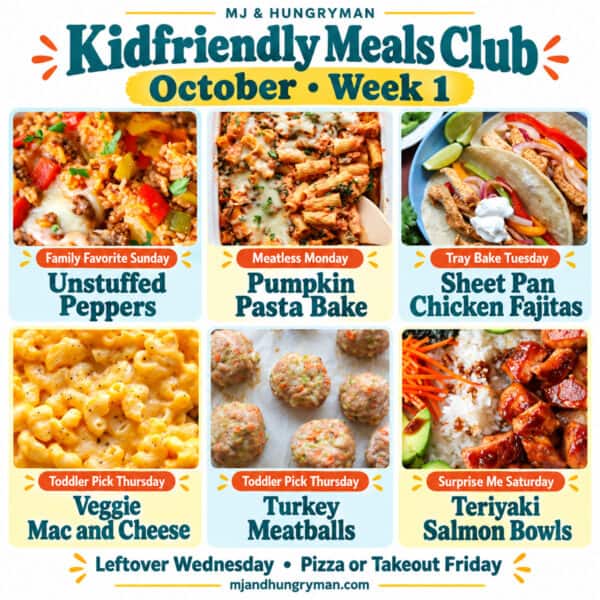
The KidFriendly Meals Club is here to make feeding your family feel simpler. As a pediatric dietitian, I’ll help quiet the noise, break down what really matters, debunk the myths, and take some of those nutrition worries off your plate.
You’re at the grocery store staring at shelves full of puffs, melts, teething crackers, toddler snacks…
Everything looks like it should be a good option.
I mean the packaging says things like “organic,” “made with real fruit,” “no artificial ingredients.”
And you’re just trying to figure out…what actually makes sense to buy.
The good news is you don’t need to stand there overthinking every single product.
Once you know what to glance at on the label, it gets a whole lot easier.
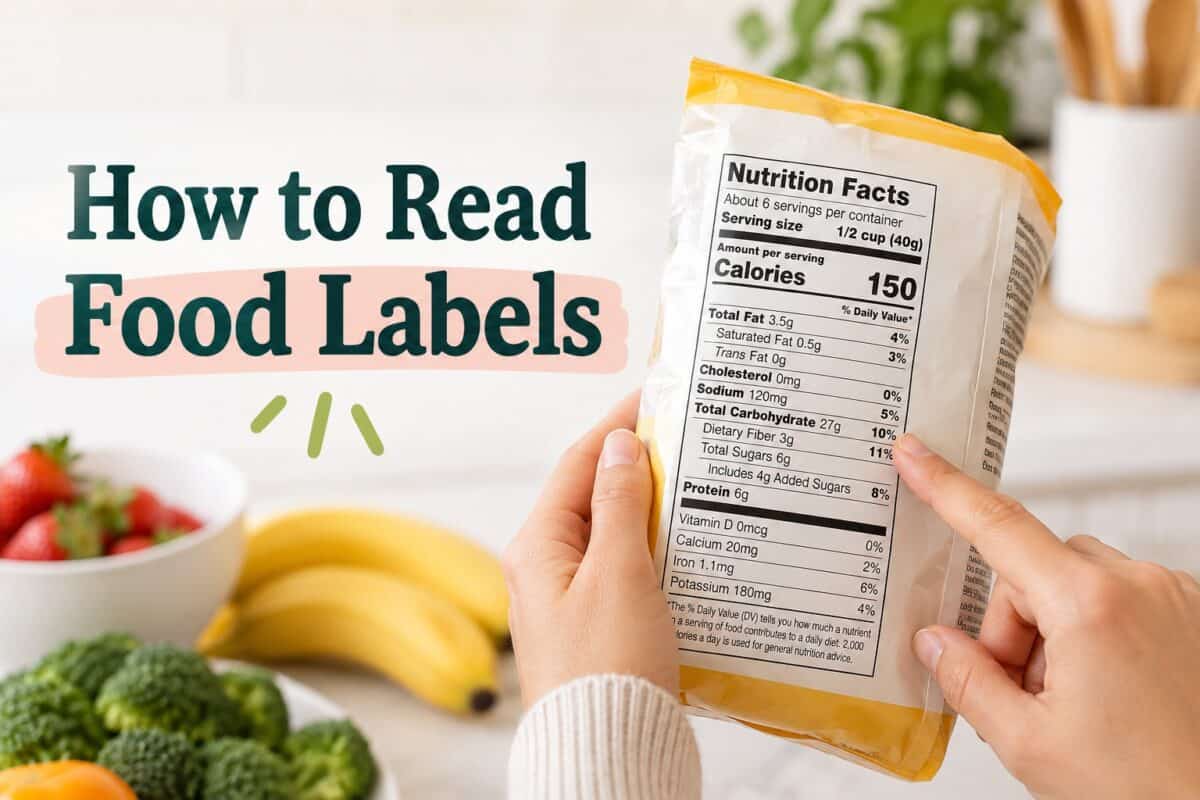
What to look for on nutrition facts food label
Once you flip the package over, here’s what I’d actually pay attention to:
Added sugar
When you hear “added sugar,” you may immediately think of cookies, candy, and desserts, but it can show up in some pretty unexpected places too, such as bread, pasta sauce, plant based milks, crackers, nut butters, and other everyday foods.
For babies and toddlers under 2, the recommendation is to avoid added sugars when possible. BUT as a pediatric dietitian, I don’t want you stressing over every gram. Added sugar is common in our food supply, so avoiding it completely can be really hard without driving yourself crazy.
Instead, use the label as a helpful guide. Look for “Added Sugars” underneath “Total Sugars” on the Nutrition Facts panel. When comparing similar products, aim for the option with little to no added sugar when you can.
And remember, Total Sugars and Added Sugars are not the same thing. Foods like fruit and plain dairy naturally contain sugar, and those sugars don’t need to be avoided.
Pediatric Dietitian Tip: Aim for little to no added sugar most of the time, especially under age 2, but don’t feel like you need to find the “perfect” product. It’s the overall pattern that matters.
Sodium
Babies don’t need much sodium, and their kidneys are still developing, so this is one I like to be mindful of.
A simple guide:
- Under 12 months: try to keep it under ~50 mg per serving
- 12–24 months: aim for around 100–200 mg per serving
When buying packaged foods, look for no salt added or lower-sodium options as much as possible. Sodium can add up quickly from foods like bread, cheese, crackers, canned foods, sauces, and other convenience foods.
As kids get older, you can be more lenient but do focus on the bigger picture. Most sodium in our diets comes from packaged, prepared, and restaurant foods, not just the salt shaker. Comparing labels can be especially helpful because two brands of the same food can have very different amounts of sodium.
Pediatric Dietitian Tip: Pay the most attention to foods your child eats often. Choose lower-sodium versions when it’s an easy swap, drain and rinse canned beans and vegetables, and experiment with herbs, spices, and other seasonings to build flavor without always relying on salt.
You don’t need to count every milligram! Small choices with everyday foods can add up.
Iron
Around 6 months, babies’ iron stores start to decrease, so regularly offering iron-rich foods becomes especially important.
What to look for:
When comparing packaged foods, look for options with around 10% of the Daily Value (DV) for iron or more when possible.
Helpful options:
- Meat, beans, lentils, tofu, and eggs
- Fortified breads, cereals, and snacks
Pediatric Dietitian Tip: Don’t stress about every food being high in iron. Instead, aim to include an iron-rich food regularly throughout the day. Pairing plant-based sources of iron with vitamin C-rich foods like berries, oranges, bell peppers, broccoli, or tomatoes can also help your child absorb more iron.
Calcium
Before age 1, babies generally get most of their calcium from breast milk or formula. After the first birthday, calcium-rich foods become an important part of helping meet their needs as they grow.
What to look for:
When comparing packaged foods, check the % Daily Value for calcium. 5% DV or less is considered low, while 20% DV or more is considered high. You don’t need every food to be high in calcium. Think about calcium intake across the whole day.
Helpful options:
- Yogurt and cheese
- Whole milk after age 1
- Fortified unsweetened soy milk
- Calcium-set tofu
- Beans and calcium-rich vegetables like kale, broccoli, and bok choy
- Other calcium-fortified foods
Pediatric Dietitian Tip: Toddlers ages 1–3 need about 700 mg of calcium per day, but there’s no need to track every milligram. Focus on regularly offering calcium-rich foods throughout the day. If your child doesn’t consume dairy, check labels carefully because calcium and other nutrients can vary quite a bit among plant-based alternatives.
Healthy Fats
Fat is especially important during the early years to support brain development, growth, and overall health. Young children generally don’t need low-fat or fat-free foods unless recommended by their healthcare provider.
Healthy fats → don’t skip these
Fat is especially important in the early years for brain development, growth, and overall health.
What to look for:
Check the ingredient list for nourishing fat sources like:
- Olive or avocado oil
- Avocado
- Nut and seed butters
- Nuts and seeds
- Fatty fish like salmon
Oils like olive and avocado oil are great choices, but canola, sunflower, safflower, and soybean oils can fit into a healthy diet too. They’re primarily sources of unsaturated fats, and some, such as canola and soybean oil, also provide essential omega-3 and omega-6 fatty acids. There’s no need to scan ingredient lists trying to eliminate all seed oils.
Pediatric Dietitian Tip: Don’t choose a product just because the front says “low-fat” or “fat-free.” For babies and young toddlers, fat is an important part of a balanced diet. Focus more on the overall ingredient list and variety of fat sources you’re offering rather than trying to minimize fat.
Protein
Most babies and toddlers are already getting enough protein without us having to count grams or seek out high-protein foods.
What to look for:
When reading the Nutrition Facts label, you’ll see protein listed in grams, but you generally don’t need to look for a specific number or choose the product with the most protein.
And if the front of the package says “high protein” or “protein packed,” it’s okay to pause and ask: Does my child actually need more protein?
For most little ones, nutrients like iron and healthy fats, along with overall variety, are often more helpful to pay attention to than maximizing protein.
Pediatric Dietitian Tip: Don’t let a big protein number on the front of a package automatically make you think it’s the better choice. Flip it over and look at the full picture. What else is the food providing? Protein is just one piece of the puzzle.
A few simple shopping habits that help:
Reading food labels doesn’t have to mean analyzing every number or ingredient. The goal is simply to know what to look for so you can make an informed choice without overthinking it.
A few things that can help:
- Choose plain or unsweetened when it makes sense. You can always add your own fruit or other flavors at home.
- Flip the package over. Claims on the front are marketing. The Nutrition Facts label and ingredient list tell you much more about what’s actually inside.
- Compare similar foods side by side. If you’re deciding between two yogurts, cereals, breads, or snacks, a quick comparison can make choosing easier.
- Keep the big picture in mind. One food, ingredient, or nutrient doesn’t make or break your child’s diet. Variety over time matters much more.
- You don’t need “baby-specific” foods. Many of the same foods your family already eats can work beautifully for babies and toddlers with age-appropriate preparation.
All that to say, you don’t need to find the “perfect” product. Use the label as a tool, not a report card. Look at what matters most for your child, make the best choice you can with the options available, and move on!
Feeding your family shouldn’t require a nutrition degree. That’s what I’m here for!
I hope this helps make your next trip down the grocery aisle feel a little simpler and a lot less overwhelming.