
This post may contain affiliate links. Please see our disclosure policy for more details.
Toast. Crackers. Yogurt. Pasta. Repeat. 😂
If your child seems perfectly content eating the same handful of foods every single day, you’re definitely not alone.
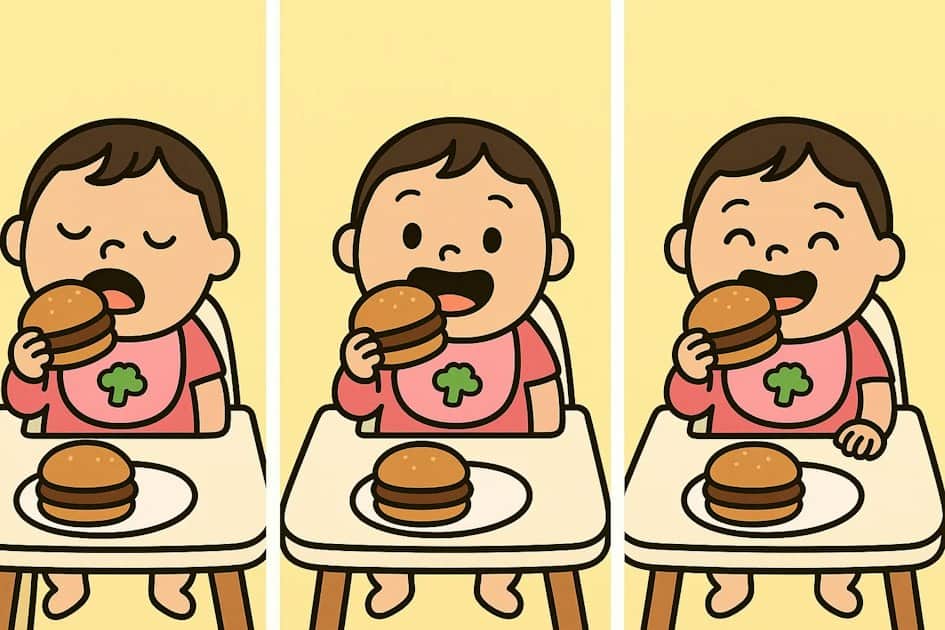
Kids naturally gravitate toward what feels familiar and predictable. When they already know exactly how a food is going to look, taste, and feel in their mouth, there’s very little uncertainty involved.
New foods, on the other hand, come with a lot of unknowns. Will it be crunchy? Mushy? Sour? Will it taste different from the last time I had it?
And some children are simply more cautious around unfamiliar tastes, smells, and textures than others.
This is why I don’t want you to suddenly take away all of your child’s favorite foods in an effort to “make” them eat something different. Instead, we want to use those familiar foods as a bridge while continuing to give them opportunities to learn about new ones.
What to Do When Your Child Only Wants Their Favorite Foods
1. Always include a familiar food
When possible, include at least one food at the meal that your child generally feels comfortable eating.
This doesn’t mean making an entirely separate meal or guaranteeing they’ll eat it that day. Even favorite foods get rejected sometimes!
It simply gives them something familiar alongside foods they’re still learning to enjoy.
For example, if you’re having chicken, roasted broccoli, and rice and you know your child usually enjoys rice, serve everything together. The rice can be that familiar food while they continue getting exposure to the chicken and broccoli.
2. Don’t stop serving foods just because they aren’t eating them
This is where so many parents understandably get discouraged.
You serve broccoli five times. Your child doesn’t touch it five times. So you think, Well, they clearly don’t like broccoli.
Not necessarily!
Learning to eat a new food can take time. Sometimes a LOT of time.
And remember: exposure doesn’t only mean eating.
Seeing the broccoli on the table counts.
Putting it on their plate counts.
Touching it counts.
Smelling it counts.
Helping you wash or cut it counts.
Licking it and deciding not to eat it counts.
Instead of keeping track of how many bites they take, focus on continuing to provide low-pressure opportunities to become familiar with the food.
3. Change ONE thing about a favorite food
If your child loves a particular food, you don’t have to jump straight from their favorite buttered noodles to a completely unfamiliar dinner.
Build from what they already enjoy.
If they love toast, try different shapes, spreads, or types of bread.
If they love strawberries, serve them whole, sliced, mashed into yogurt, or alongside another berry.
If they love plain pasta, you might serve their usual pasta with a tiny amount of sauce on the side for dipping.
The goal isn’t to sneak foods in or make their favorite food unrecognizable. It’s to gently help them become comfortable with small changes.
4. Keep portions of new foods SMALL
More isn’t always better.
If your child is hesitant around a food, a huge serving can feel overwhelming.
Start with a tiny amount…a single broccoli floret, one blueberry, a small piece of chicken.
They can always have more.
And if they don’t touch it? That’s okay. The goal right now may simply be allowing that food to comfortably exist on their plate.
5. Give choices but within YOUR boundaries
Toddlers LOVE having some control, so use that to your advantage.
But you don’t need to ask:
“What do you want for dinner?”
And you definitely don’t need to offer three separate meals.
Instead, offer simple choices within what you’re already planning.
“Do you want peas or broccoli with dinner?”
“Do you want your banana sliced or whole?”
“Should we put the cucumbers here or here?”
“Do you want the sauce on your plate or in a little bowl?”
You still provide the structure. They get an age-appropriate opportunity to make a choice.
6. Get them involved BEFORE the food reaches the table
Eating isn’t the only way to become comfortable with food.
Invite your child into the kitchen when you can.
Let them wash the strawberries, tear lettuce, dump ingredients into a bowl, stir pancake batter, sprinkle cheese, or put vegetables onto the sheet pan.
And don’t make tasting the goal.
Sometimes simply touching, smelling, washing, chopping, or preparing a food is incredibly valuable exposure.
7. Talk about food without trying to sell it
You don’t need to convince your child that broccoli is “yummy” or tell them they’ll grow big and strong if they eat their chicken.
Instead, get curious together.
“This pepper is really crunchy.”
“That raspberry is squishy!”
“These carrots are orange. Look at this purple one!”
“This one smells sweet to me.”
Talking about a food’s color, shape, smell, sound, temperature, or texture allows children to explore it without feeling like the conversation is secretly leading to, Now put it in your mouth.
And sometimes? Don’t talk about the food at all. Enjoy your meal and let them watch you eat.
8. Resist making another meal when they refuse
This can be HARD, especially when you know your child would happily eat a bowl of cereal instead.
But if refusing dinner consistently leads to a favorite food appearing, children can quickly learn that they don’t really need to engage with what’s served.
Instead, offer a meal that includes something familiar, allow your child to decide what and how much to eat from what’s offered, and stick with your normal meal and snack routine.
You’re not forcing them to eat.
You’re also not becoming a short-order cook.
9. Look at the bigger picture
One dinner tells you very little about your child’s overall nutrition.
Maybe they barely touch dinner tonight but eat a huge breakfast tomorrow.
Maybe they eat very little protein at one meal and plenty at another.
Instead of trying to make every plate perfectly balanced or insisting they eat something from every food group, zoom out and look at their intake over several days.
Variety over time matters more than perfection at every meal.
10. Know when picky eating may need extra support
There’s a difference between a child who prefers familiar foods and a child whose eating is becoming increasingly restricted or interfering with their health or everyday life.
Talk with your pediatrician, pediatric dietitian, or feeding therapist if you’re concerned about your child’s growth or nutritional intake, their list of accepted foods continues to shrink, they have significant difficulty chewing or swallowing, frequently gag or vomit with foods, have intense fear or distress around eating, or mealtimes are becoming extremely difficult for your family.
You know your child best. If something about their eating feels like more than typical selectivity, it’s always okay to ask for help.
Remember: You’re Playing the Long Game
I know it’s frustrating to put a food on your child’s plate again and again only to watch it sit there untouched.
But our goal isn’t to get them to eat the broccoli tonight.
We’re helping them build familiarity, confidence, and the skills they need to eventually enjoy a wider variety of foods.
So keep offering.
Keep modeling.
Keep mealtimes low pressure.
And remember that touching, smelling, licking, helping prepare, and simply tolerating a food on the table are all part of learning to eat.
Exposure without pressure is progress, too.