
This post may contain affiliate links. Please see our disclosure policy for more details.
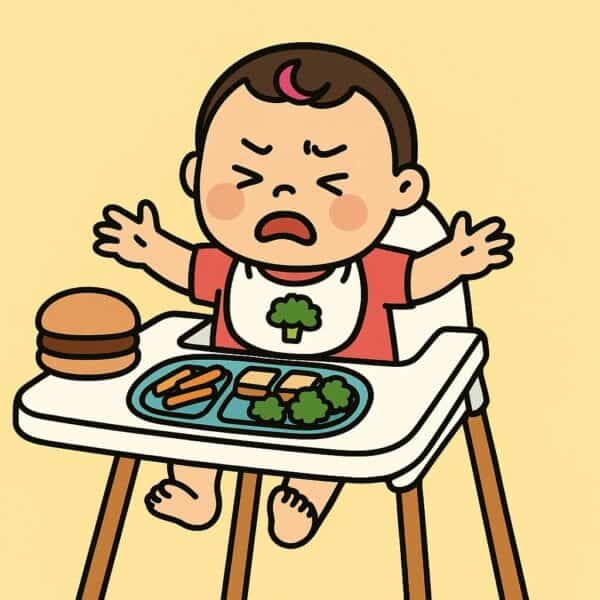
You made your child’s favorite dinner. Everything is going great until a piece of broccoli touches their pasta.
And suddenly? Meltdown.
You might be thinking, It’s the same food! What’s the big deal?!?!?
But to your child, it really can be a BIG deal!
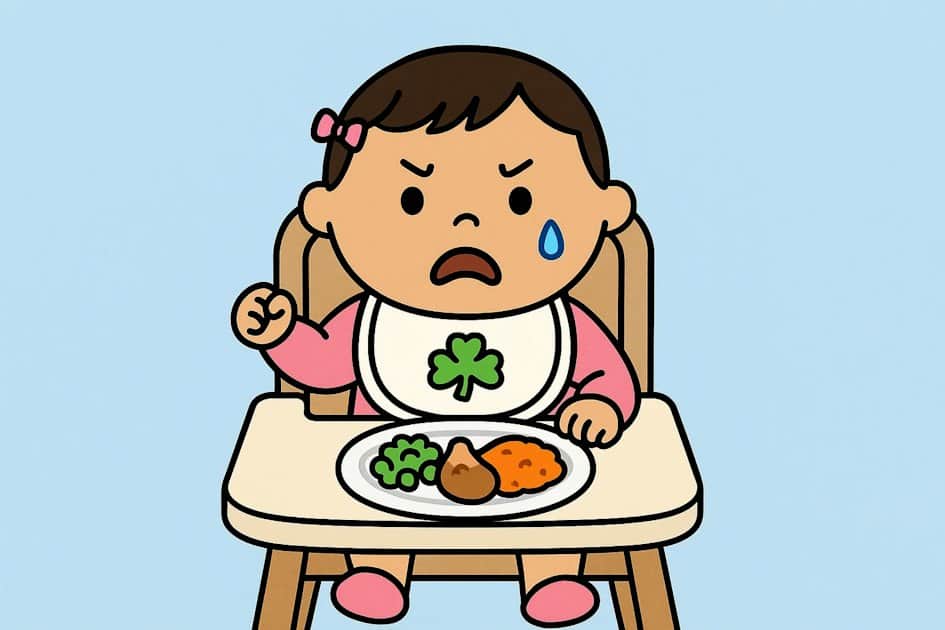
Young children often have very specific preferences about how their food looks, tastes, and feels. And when two foods touch, even something as simple as a little sauce getting on their rice can make a familiar food feel completely different.
But the good news is, you don’t need to force your child to eat mixed foods or insist that everything touch to help them become more flexible.
Instead, we can meet them where they are, take the pressure off, and gently create opportunities to explore foods in different ways.
Let’s talk about why this happens and what you can do to make mealtimes a little easier for everyone.
Table of Contents
Why Doesn’t My Child Like Foods Touching?
First, know that this is a common preference among young children. It doesn’t automatically mean your child is a picky eater or that you’ve done something wrong.
There are several reasons your child might prefer foods to stay separate.
1. They feel more comfortable with what’s familiar
Think about how your child likes to read the same book over and over or insists on using a particular cup.
Familiarity can be comforting, especially during the toddler and preschool years when children are still learning to navigate changes and unexpected experiences.
Food is no different.
Your child knows exactly what their favorite plain pasta looks and tastes like. But when some broccoli sauce gets on it? Suddenly, it’s not quite the pasta they were expecting.
For a child who’s already cautious around food, even a small change can make them hesitant to eat it.
2. Foods actually DO change when they touch
Sometimes we forget that foods touching can change the eating experience!
Think about it:
- Strawberries can make crackers soggy.
- Sauce can change the flavor and texture of rice.
- Juice from one fruit can get onto another.
- Warm foods can change the temperature of cold foods.
So while it might seem like your child is getting upset over nothing, they may genuinely notice a difference.
And for some children, those differences matter a lot.
3. They may be more sensitive to certain textures, smells, or flavors
Every child experiences food differently.
Some kids happily mix everything on their plates without giving it a second thought. Others are much more aware of changes in texture, smell, temperature, and taste.
For a child who is particularly sensitive to these sensations, having foods touch may feel uncomfortable or overwhelming.
It’s not necessarily defiance or an attempt to be difficult. It may simply be how they’re experiencing the food.
4. They’re still developing flexibility
Young children are learning how to handle things that don’t go exactly as expected. My 9-year-old is still working on this too!
This can show up in all kinds of situations, including how their food is served
They may have a very specific idea of what their favorite foods should look like.
My noodles are plain.
My strawberries go in this bowl.
My chicken doesn’t have sauce on it.
When something changes, their first reaction might be to reject it.
That’s where we can help.
Through repeated, positive, low-pressure experiences, children have opportunities to become more familiar with different food combinations and practice handling small changes.
But remember, the goal isn’t to make your child love every food combination. It’s to help them feel more comfortable exploring and navigating new experiences.
8 Ways to Help Your Child When They Don’t Want Foods Touching
1. Don’t turn it into a battle
I know it can be frustrating when your child refuses their entire dinner because one tiny pea touched their pasta.
But trying to convince them that it’s no big deal usually doesn’t help.
Instead of saying:
“It’s fine! Just eat it.”
“They barely touched!”
“There’s nothing wrong with it!”
Try acknowledging what happened without making it a big deal.
What you can say:
“Oh, you didn’t want the peas touching your pasta. You can move them over here.”
And then move on.
You don’t need to fix every little thing or convince your child to eat the food.
By staying calm and neutral, you’re helping keep mealtimes from becoming a power struggle.
And that’s far more important than whether the peas and pasta touch tonight.
2. Yes, it’s okay to use a divided plate!
I often hear parents worry that using divided plates will make their child a picky eater.
But here’s what I want you to know: There’s no good evidence that using divided plates, by itself, causes picky eating.
If a divided plate helps your child feel more comfortable at mealtime, it’s perfectly fine to use one!
At the same time, you don’t need to feel like every food must always have its own compartment.
You can offer a regular plate sometimes, use small bowls for sauces, or simply leave a little space between foods.
Think of divided plates as one helpful tool, not something you have to use forever or something you need to take away.
The goal is to support your child’s comfort while gradually offering opportunities for flexibility.
3. Offer foods mixed AND separated

This is one of my favorite strategies because it allows your child to experience the same family meal without feeling overwhelmed.
Let’s say you’re having chicken and vegetable fried rice.
Instead of serving only a big scoop of everything mixed together, you might offer:
- A small portion of the fried rice
- A little plain rice
- A few pieces of chicken or vegetables on the side
Or if you’re having spaghetti, you can offer some noodles with sauce and leave a few plain.
This way, your child has something familiar to enjoy while also having the opportunity to see, smell, touch, or taste the mixed version.
And here’s the important part: They don’t have to eat the mixed food for the experience to be worthwhile.
Simply having it available without pressure can help build familiarity over time.
4. Start with tiny changes

You don’t need to go from a perfectly separated plate to a casserole with everything mixed together overnight!
In fact, for a child who is particularly sensitive to foods touching, that may feel like a HUGE leap.
Instead, think small.
Maybe today, two familiar foods are served on the same plate with space between them.
Another day, your child watches you dip a piece of chicken into sauce.
Perhaps next time, they decide to dip their own chicken.
Or maybe they’re willing to put a tiny bit of sauce on one noodle.
These are all opportunities to explore.
Small steps count, and there’s no need to rush.
5. Let THEM do the mixing
Kids love having some control, especially when it comes to food!
Rather than always serving foods already mixed together, try offering the ingredients separately and letting your child decide what to combine.
For example:
- Serve berries on the side of yogurt.
- Offer pasta with sauce in a small bowl for dipping.
- Set out taco ingredients so everyone can build their own.
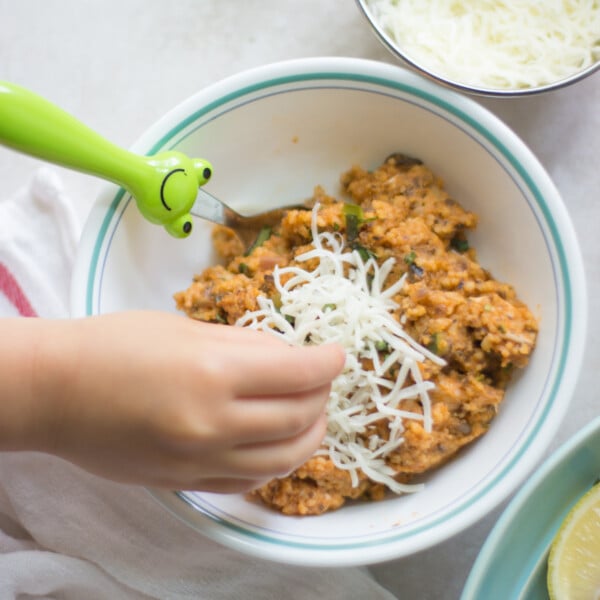
- Let your child add toppings to their oatmeal or rice bowl.
They might choose to mix everything together.
Or they might keep every single ingredient separate.
Both are okay!
Giving children age-appropriate choices can help them feel more comfortable exploring foods without feeling pressured.
Keep in mind, you’re still deciding what foods to offer and when to serve them. Your child gets to decide whether and how much to eat.
6. Let them problem-solve
Let’s say a blueberry rolls into your child’s scrambled eggs.
Their immediate reaction?
“NOOO! IT’S TOUCHING!”
Before rushing to make an entirely new plate, see if you can help them find a simple solution.
You might say:
“Looks like your blueberry rolled over. You can move it back.”
Or if they don’t like sauce touching their chicken:
“You can scrape some of the sauce off if you’d like.”
This gives your child a way to manage an unexpected change.
Of course, if they’re already very upset, they may need your help.
You can acknowledge their feelings, offer a simple solution, and continue with the meal.
7. Model flexibility without making it a lesson
One of the simplest ways to introduce children to different food combinations is to let them watch YOU enjoy them.
Mix your rice and beans.
Dip your chicken into sauce.
Stir berries into your yogurt.
You don’t need to make a big announcement or say, “See? Mommy mixed hers! Now you try!”
In fact, that can turn what was meant to be a positive experience into pressure.
Instead, just enjoy your food.
If your child seems interested, you can casually describe what you’re doing.
“I’m mixing my strawberries into my yogurt.”
“I like dipping my chicken in this sauce.”
And leave it at that.
Children learn a lot through observation, even when it doesn’t seem like they’re paying attention.
You can model curiosity and enjoyment without expecting your child to copy you.
8. Explore mixing foods OUTSIDE of mealtimes
This is such an underrated strategy!
Sometimes the best time to help your child become more comfortable with foods isn’t when they’re expected to eat them.
It’s when you’re cooking together!
Invite your child to:
- Stir berries into oatmeal.
- Sprinkle vegetables onto pizza.
- Mix ingredients for muffins.
- Build their own tacos.
- Stir sauce into pasta.
- Mash avocado into a dip.
These activities allow children to explore how foods look, smell, feel, and change when combined.
And because there’s no expectation to eat, the experience may feel less overwhelming.
If your child doesn’t want to touch certain ingredients, that’s okay too. They can use a spoon, watch you mix, or participate in another way.
And no, they don’t have to eat what they helped make for the experience to count!
When Should You Be Concerned About Foods Touching?
For many children, preferring foods to stay separate is simply that, a preference!
And honestly, plenty of adults don’t like their foods touching either!
If your child is eating a reasonable variety of foods, growing well, and generally enjoying mealtimes, there’s usually no reason to worry about this preference alone.
But it’s important to look at the bigger picture.
Consider talking with your child’s pediatrician or a pediatric feeding specialist if your child:
- Becomes extremely distressed when foods touch, and it’s happening frequently.
- Has a very limited or shrinking list of accepted foods.
- Avoids entire categories of textures or food consistencies.
- Frequently gags, coughs, or vomits during meals.
- Struggles to eat enough to support their nutritional needs or growth.
- Experiences significant anxiety or distress around eating that affects everyday family life.
These signs don’t automatically mean something is wrong, but they may indicate that your child would benefit from additional support.
And you don’t have to wait until growth is affected to ask for help.
Flexibility Takes Time
If there’s one thing I want you to take away, it’s this:
Your child doesn’t need to enjoy mixed foods to become a confident, capable eater.
Some people genuinely prefer their foods separate, and that’s okay!
What matters more is helping your child feel safe and supported at mealtimes while giving them opportunities to explore and become more comfortable with different foods.
So if the broccoli touches the pasta tonight and your child gets upset?
Stay calm.
Acknowledge their feelings.
Help them find a simple solution if they need one.
Then move on and enjoy your meal.
You don’t need to turn every mealtime into a teaching moment or push your child outside their comfort zone.
Meet them where they are, keep the pressure off, and give them time and opportunities to grow.