
This post may contain affiliate links. Please see our disclosure policy for more details.
If your baby happily eats smooth purées but turns away from anything with lumps or refuses finger foods altogether, I know how concerning this can feel. You may be wondering if you’re doing something wrong, if your baby is falling behind, or if they’ll ever learn to eat regular food.
First, I want to reassure you that starting with purées is not a mistake! I know there’s a lot of messaging out there, especially in baby-led weaning groups, that can make you feel like offering purées is somehow the wrong approach. But that’s simply not true!
Purées can absolutely be part of a healthy introduction to solids, and there’s no need to choose between spoon-feeding and baby-led weaning. Both can have a place in helping your baby learn to eat.
That said, learning to manage different textures is an important developmental skill. And while some babies take to finger foods right away, others need more time, practice, and sometimes additional support.
Let’s talk about why your baby may be struggling and, more importantly, what you can do to help them move forward safely and confidently.
Why Your Baby May Prefer Purées
There isn’t always one clear reason. Often, it’s a combination of familiarity, developing skills, and how your baby experiences different textures.
- Smooth purées feel familiar. If your baby has mostly eaten smooth foods, that’s what they’re used to. A thicker, lumpier texture can feel completely different, even when it’s a food they already enjoy. This doesn’t mean they won’t learn to accept other textures, but they may need more opportunities to practice.
- Some babies are more sensitive to textures. Think about how different smooth yogurt feels compared to mashed avocado or soft broccoli. For babies who are more sensitive to sensory input, these differences can be overwhelming. They may turn their heads, spit food out, or refuse to open their mouths. These behaviors can be signs of discomfort, not simply stubbornness.
- They may need more experience with textured foods. Research suggests that delaying the introduction of lumpy textures beyond approximately 9–10 months is associated with greater feeding difficulties later in childhood. This doesn’t mean there’s a strict deadline or that introducing textures later will necessarily cause problems. But it does highlight why it’s important to offer opportunities to explore different textures as your baby develops.
- Their oral motor skills are still developing. Eating involves much more than swallowing! Babies need to learn how to bite, move food around their mouths, and use their tongue and jaw to break it down before swallowing. These skills develop with experience and practice. Some babies may need additional support if they’re having difficulty coordinating these movements.
- Mealtimes may have become stressful. When your baby repeatedly refuses food, it’s only natural to worry and try harder to get them to eat. But pressuring, distracting, or repeatedly offering bites after they’ve turned away can actually make babies more resistant to eating. Keeping mealtimes relaxed and following your baby’s cues can help them feel more comfortable exploring new foods.
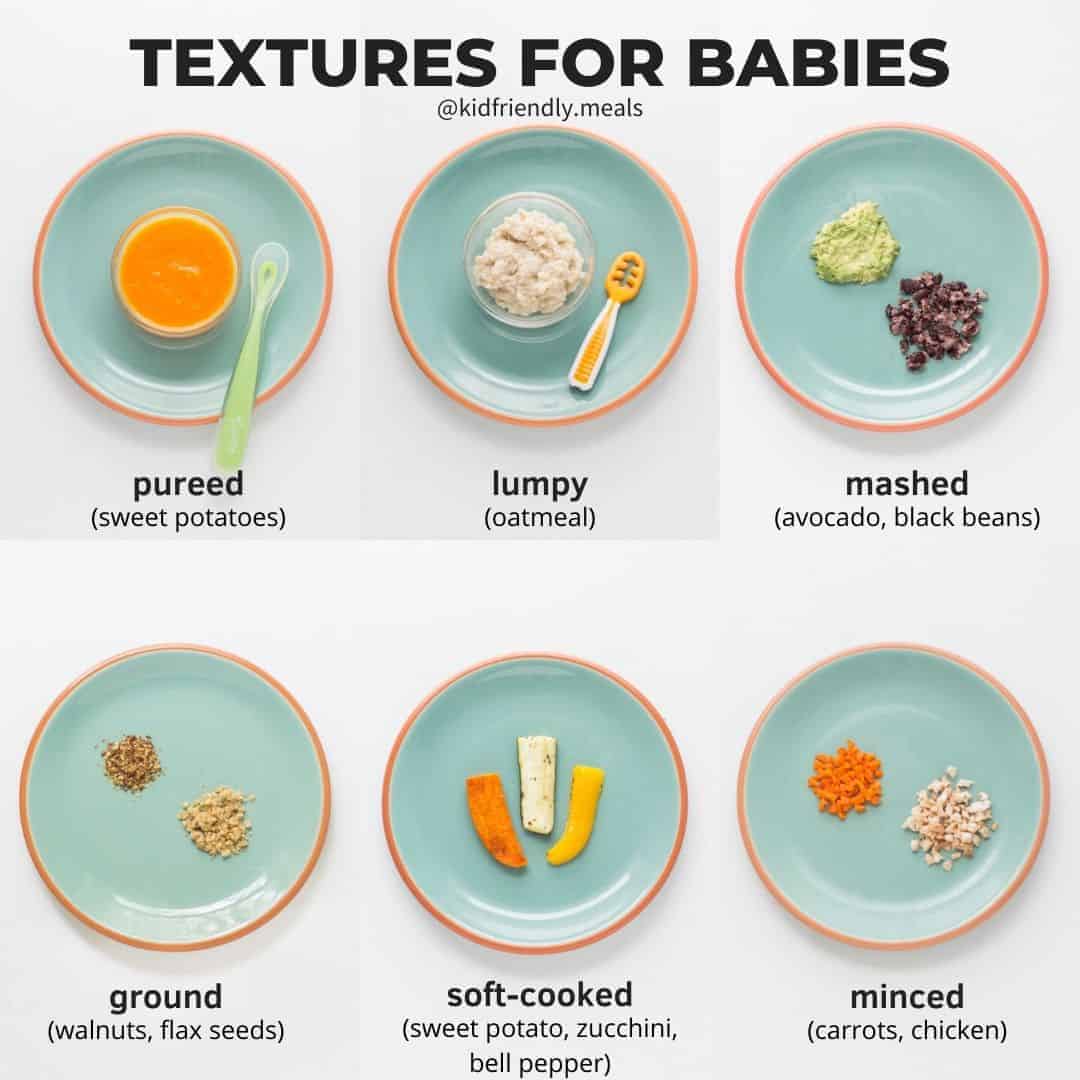
How to Help Your Baby Move Beyond Purées
The goal isn’t to stop offering purées or to get your baby to take a certain number of bites. It’s to help them gradually build the skills and confidence needed to manage a variety of textures.
1. Start with Familiar Foods and Gradually Change the Texture

One of the easiest places to start is with foods your baby already enjoys.
For example, if your baby loves smooth sweet potato purée, try making it a little thicker. Once they’re comfortable with that, you can offer a softly mashed version with small, easily squishable lumps.
Other ideas include:
- Mashed banana or avocado instead of completely smooth purée
- Thicker oatmeal (try this egg oatmeal)
- Softly mashed beans instead of fully blended beans
- Well-cooked vegetables mashed with a fork
2. Offer Soft Finger Foods Alongside Purées

You don’t have to choose between spoon-feeding and baby-led weaning. A combination of both can work beautifully!
Continue offering familiar purées while providing opportunities to explore soft, easy-to-hold finger foods.
Depending on your baby’s age and developmental abilities, you might try:
- Soft, ripe avocado wedges (how to serve avocado to babies)
- Steamed sweet potato wedges (sweet potato for babies)
- Very soft broccoli florets (broccoli for babies)
- Ripe banana spears (banana for babies)
- Tender omelet strips (eggs for babies)
- Moist, soft patties like these sweet potato patties and shrimp cakes
Choose foods that are appropriately sized and prepared for your baby’s current skills. They should be soft enough to easily squish between your fingers.
And remember, placing a finger food on the tray doesn’t mean your baby has to eat it. They may simply look at it or pick it up, and that’s okay.
3. Give Your Baby Opportunities to Self-Feed
Sometimes babies are more willing to explore new textures when they’re the ones in control.
Try offering a preloaded spoon with mashed food and letting your baby bring it to their mouth. And you NEED to get this baby spoon! Here are more of my favorite Baby Feeding Essentials.
You can also place a soft finger food on their tray and allow them to explore it at their own pace.
Avoid putting food directly into their mouth when they’re turning away or showing signs that they’re not interested.
This isn’t about letting your baby do everything independently. You can absolutely help and spoon-feed when they’re receptive! The important thing is to follow their cues and allow them to participate in the feeding process.
4. Let Them Explore Without Expecting Them to Eat
I know it can be frustrating to prepare food only to watch your baby squish it, smear it, or drop it on the floor.
But that exploration serves a purpose!
Touching and handling foods allows babies to become familiar with different textures before they even reach their mouths.
You can encourage this by:
- Offering a small amount of food directly on the tray
- Allowing them to touch and squish soft foods
- Letting them explore a spoon or age-appropriate teether
- Keeping your reactions calm and neutral, even when they make a mess
Sensory exploration can be a helpful part of learning to eat, although it doesn’t replace the oral motor practice needed to manage food safely.
5. Eat Together Whenever Possible
Babies learn by watching the people around them.
Whenever possible, sit down and enjoy meals together. Let your baby see you picking up food, taking bites, and chewing.
You can exaggerate your chewing movements occasionally or demonstrate how you dip a soft food into a familiar purée.
There’s no need to constantly encourage them to copy you. Simply including them in family meals gives them opportunities to observe and learn.
6. Understand Gagging, but Don’t Ignore Persistent Difficulties
Gagging is a normal protective reflex, especially as babies begin exploring more textured foods.
It can be unsettling to watch, but gagging and choking are different. Gagging often involves retching and may be noisy, while a baby who is choking may be unable to breathe, cry, or cough effectively.
Always have your baby seated upright, offer appropriately prepared foods, and supervise closely. It’s also important for caregivers to learn infant choking first aid.
While occasional gagging can be part of learning, frequent or severe gagging shouldn’t automatically be dismissed as normal.
If your baby consistently gags or vomits with textured foods, coughs during meals, or seems unable to move food around their mouth, talk with your pediatrician. These signs may indicate that additional feeding support is needed.
7. Focus on Progress, Not How Much They Eat
It’s easy to measure success by how many bites your baby takes. But when they’re learning a new skill, progress can look very different.
Maybe yesterday they wouldn’t touch a piece of avocado, but today they picked it up. Or perhaps they brought a food to their lips for the first time.
Those are meaningful steps!
Try to avoid celebrating bites in a way that makes your baby feel pressured to perform. Instead, stay warm and neutral.
You might simply say, “That’s avocado. It’s soft!” or “You’re feeling the broccoli.”
And if your baby doesn’t want to engage with the food? That’s okay too. You can try again at another meal.
8. Know When to Ask for Help
This is something I really want to emphasize! You don’t need to wait until your baby turns one to seek support.
As mentioned earlier, delaying lumpy textures beyond approximately 9–10 months has been associated with later feeding difficulties.
Of course, this doesn’t mean every baby needs to master finger foods by a specific age. Development varies, and there are many reasons why a baby may need extra support.
But if your baby is approaching 10 months and continues to accept ONLY completely smooth purées, it’s worth discussing with your pediatrician rather than simply waiting for them to outgrow it.
Seek guidance sooner if you notice:
- Frequent coughing, choking, or significant gagging during meals
- Repeated vomiting with textured foods
- Difficulty moving food around the mouth or swallowing
- Persistent refusal of textures beyond smooth purées
- Significant distress during meals
- Concerns about weight gain, growth, or nutritional intake
A pediatric feeding therapist, such as a speech-language pathologist or occupational therapist with specialized feeding training, can evaluate your baby’s skills and help you determine the best next steps.
Getting help doesn’t mean something is seriously wrong. Sometimes a little individualized guidance can make a big difference.
All this to say…
Continue offering familiar foods while gently creating opportunities to explore new textures. Follow your baby’s cues, keep meals as relaxed as possible, and don’t feel pressured to rush or force bites.
At the same time, trust your instincts. If your baby is consistently struggling, you don’t have to figure it all out on your own. Early support can help make mealtimes safer, more comfortable, and more enjoyable for everyone.