
This post may contain affiliate links. Please see our disclosure policy for more details.
If your child spits out new foods after just one bite, it might feel like progress is impossible.
But tasting, even just once, is still a step forward. Here’s what might be behind that reaction and how to support their learning (without turning mealtimes into battles).
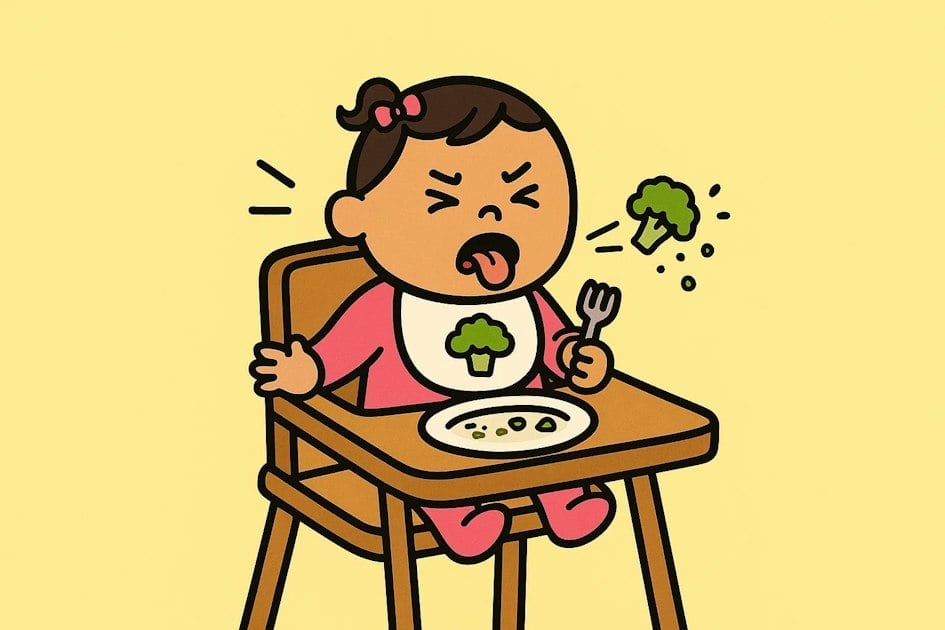
Table of Contents
Why This Happens
- It’s a sensory thing
New textures, flavors, or temperatures can feel strange or even overwhelming. Spitting it out is their way of saying, “This feels different, and I don’t know what to do with it.” - They’re still learning how to eat
Trying a new food takes courage and spitting it out doesn’t mean they hated it. It often means they’re still figuring out how to manage it in their mouth. - It’s part of exploration
Just like babies drop toys to explore, kids may spit out food as a way of learning about it. Tasting and rejecting can still be progress. - It’s not what they expected
If the taste or texture caught them off guard (even slightly), they might instinctively spit it out even if they were open to trying it at first. - They’re testing boundaries
For some kids, especially toddlers, spitting can be a way to get a reaction or see what happens next. It’s not always about the food. - It’s a control move
When kids feel unsure or overwhelmed, spitting food out might be their way of regaining some control in the moment. - They’re not ready yet
Even if they seem curious, they may not be developmentally or emotionally ready to accept certain foods. And that’s okay. Exposure still counts!
What To Do
- Reframe spitting as progress, not failure. Taking a bite (even if they spit it out) means they were curious enough to try. That’s a step forward, NOT backward.
- Stay calm and neutral. Instead of reacting or showing frustration, say something like: “That’s okay. You don’t have to eat it.” Keeping your tone low-key helps create a safe and pressure-free eating environment.
- Offer small amounts of new foods. One or two bites is plenty. Large portions can feel overwhelming and lead to instant rejection.
- Pair new foods with familiar ones. As always, include a safe food alongside anything new. The comfort of something familiar makes the new food less intimidating.
- Encourage exploration beyond eating. Let your child touch, smell, or lick the new food without expecting them to eat it right away. You can say, “You gave it a try. Great job being brave!”
- Avoid pressure to “just swallow.” It may seem harmless, but even encouraging them to “just swallow it” can create stress around mealtimes. Let them move at their own pace.
- Model curiosity and calm. Eat the food yourself and comment casually: “Hmm, this one’s extra crunchy today” “this one’s really juicy!” Your child is watching you even when they’re not eating.
- Keep offering the food again. It often takes 15–20+ exposures for a child to accept something new. Try different shapes, textures, or preparations over time, but keep it coming. No pressure needed.
- Take a deep breath before reacting. It’s okay to feel frustrated. Pause and remind yourself: “Trying is progress. I’m doing my part.”
- Use a go-to calming phrase. Something like “Thanks for trying it” or “You can spit it out if you need to” can help keep the mood light and respectful.
- Offer a “maybe later” bowl. A designated place to spit or put unwanted food helps prevent stress and mess, while also giving your child some control.
- Focus on connection, not consumption. Reframe your goal from “getting them to eat” to “creating a safe space around food.” That shift alone can ease so much pressure.
- Celebrate small wins (even silently). Did they touch the food? Smell it? Lick it? That’s progress. Say it to yourself or jot it down as a reminder.
- Zoom out to see the big picture. One bite (or one meal) doesn’t define your child’s health. Kids balance things out over days and weeks.
- Give yourself permission to reset. Whether it’s a deep breath, a quick step outside, or a treat after bedtime. Find little ways to care for you, too.
- Repeat this to yourself: “Showing up is enough.” Every time you offer variety, stay calm, and create a supportive space, you’re doing the important work even when it doesn’t feel like it.