

This post may contain affiliate links. Please see our disclosure policy for more details.
If dessert has become THE topic of conversation at your dinner table, you’re in good company.
Kids naturally enjoy sweet foods. But when dessert is something they have to earn, wait for, or eat their way through dinner to get, it can become even MORE exciting.
And before you know it, dinner starts feeling like the obstacle standing between your child and the food they actually want.
So how do we serve sweets without making them a huge deal or turning every meal into a negotiation?
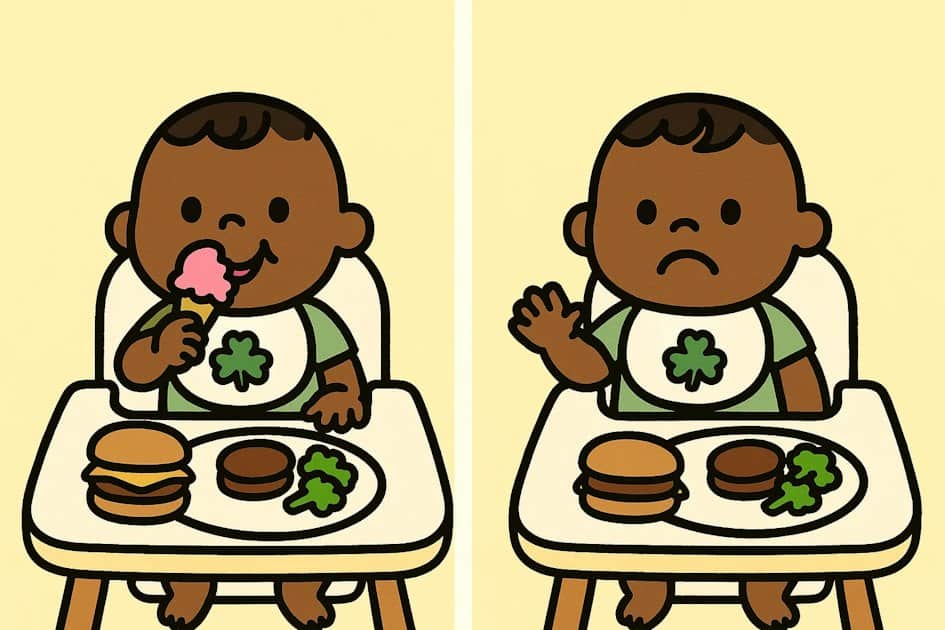
Why Is My Child So Focused on Dessert?
Dessert has been put on a pedestal
Think about the messages kids often hear:
“Eat your broccoli and then you can have dessert.”
“Two more bites and you can have a cookie.”
“If you don’t eat dinner, you don’t get dessert.”
Even though these statements usually come from a good place, they teach children something very quickly:
Broccoli is the thing I have to get through. The cookie is the prize.
And what happens to the prize?
It becomes even more desirable.
Sweet foods taste good!
Sometimes there’s really no deeper meaning.
Kids tend to have a natural preference for sweet tastes, so of course they’re going to get excited about cookies, cake, and ice cream.
We don’t need to convince them that dessert isn’t delicious.
Instead, we want to help them learn that sweets can simply be one part of eating rather than something that’s extra special, forbidden, or earned.
They’re testing the boundary
Young kids are constantly figuring out:
What happens if I ask again?
What if I don’t eat dinner?
What if I say I don’t like this?
If dessert has become something that’s negotiated at the table, they’re naturally going to keep negotiating.
This is where having a calm, consistent boundary can help tremendously.
They may not be very hungry
If your child has been grazing all afternoon, had a snack close to dinner, or filled up on milk, they simply may not have much appetite for the meal.
But could they still make room for a cookie?
Probably 😂
Honestly, adults can relate to this one too!
That doesn’t mean they’re being manipulative. Highly palatable foods can still sound appealing even when we’re not particularly hungry.
What Should You Do?
1. Stop making dessert something they have to earn
This is the BIG one.
Try to move away from:
“Eat your chicken and then you can have dessert.”
“Three more bites.”
“You didn’t eat enough dinner for a cookie.”
When dessert is conditional on eating another food, we’re asking children to override their own hunger and fullness cues to earn something they want more.
It also sends the message that the dinner food is the chore and dessert is the reward.
Dessert doesn’t need to be earned.
2. You decide when dessert is offered
Not restricting dessert doesn’t mean your child gets a cookie every time they ask for one.
You still provide the structure.
Some days you might have dessert.
Some days you won’t.
Sometimes you’ll have it after dinner. Other times you might have something sweet with an afternoon snack or even serve it alongside the meal.
If your child asks for a cookie and you’re not serving one, you can simply say:
“We’re not having cookies right now. We’ll have them another time.”
You don’t need a long explanation or negotiation.
3. Consider serving dessert WITH the meal
I know this one can feel strange at first!
But occasionally serving a small portion of dessert alongside the rest of the meal can be a great way to take it off the pedestal.
Yes, your child may eat the cookie first.
That’s okay.
They may even eat only the cookie the first few times you try this.
That’s okay, too.
The goal isn’t to use this strategy to trick them into eating more dinner. It’s to help them learn that dessert is simply another food on the table, not something they have to earn by eating everything else first.
And over time, you may be surprised to see them eat the cookie and then move right along to the other foods on their plate.
4. Don’t require them to eat dinner first
If you planned to serve dessert that evening, try not to make the amount of dinner your child eats determine whether they get it.
Otherwise, we’re right back to:
Eat this → earn that.
Your child might eat a lot of dinner that night.
They might eat two bites.
They may decide they’re finished and still enjoy dessert.
Remember, you’re responsible for what and when food is offered. Your child is responsible for whether and how much they eat.
5. Keep your response boring
If your child asks for dessert 47 times while you’re trying to eat dinner, you don’t need 47 different explanations. 😂
“Can I have a cookie?”
“Cookies aren’t on the menu right now.”
“But I WANT one!”
“I hear you. We’re not having cookies right now.”
Then move on.
You can acknowledge that they’re disappointed without changing the boundary or turning dessert into a big conversation.
6. Offer sweets regularly enough that they don’t feel forbidden
This will look different for every family.
You don’t need to serve dessert every day. And you don’t need a rigid schedule that says Tuesday, Thursday, and Saturday are dessert days.
What matters more is that sweets aren’t treated as something your child has to earn or something that’s so rare and forbidden that they feel like they need to eat as much as possible whenever it’s available.
There can be room for cookies, birthday cake, ice cream, AND broccoli within an overall balanced diet.
7. Pay attention to the language you use around sweets
Try to avoid calling dessert:
“bad”
“junk”
“a cheat”
“a special treat because you were good”
You also don’t need to convince your child that strawberries are “nature’s candy.” 😉
A strawberry can be a strawberry.
A cookie can be a cookie.
Both can have a place.
Keeping your language neutral helps children learn that foods don’t have moral value and neither do they based on what they eat.
But What If They Eat Dessert and Nothing Else?
This is usually the question parents have next.
And I get it!
If you put a cookie next to dinner and your child immediately eats the cookie and asks for five more, it can feel like you’ve just proven exactly why dessert SHOULDN’T be served with dinner.
But remember: you’re still in charge of what’s offered.
If you’ve served one cookie with dinner, you don’t have to provide unlimited cookies.
You can calmly say:
“That was what we’re having with dinner tonight. There’s more chicken, rice, and broccoli if you’re still hungry.”
No pressure to eat those foods. No additional cookie required.
And then move on.
Think Long-Term
Our goal isn’t to get our kids to choose broccoli over a cookie.
Honestly, if you put warm chocolate chip cookies in front of me, I’m probably pretty excited about those too 😂.
Our goal is to raise children who can enjoy BOTH.
Children who can enjoy birthday cake without feeling like they need to eat as much as possible because they don’t know when they’ll be allowed to have it again.
Children who can eat a cookie and move on.
Children who can listen to their bodies rather than eating three more bites of dinner because that’s what earns dessert.
So if dessert has become a nightly battle, don’t focus on how to get your child to stop wanting it.
Instead, look at the role dessert has taken on at your table.
Take it off the pedestal. Remove the pressure. Keep your boundaries. And let sweets simply be another enjoyable part of eating.