
This post may contain affiliate links. Please see our disclosure policy for more details.
“But you LOVED this yesterday!”
If you’ve ever said this to your toddler, you’re definitely not alone 😂.
One of the most frustrating parts of feeding young kids is how quickly their preferences can change. Your child happily eats scrambled eggs every morning for months…until one day they won’t touch them. Or strawberries were their absolute favorite, you bought the giant Costco container, and suddenly they’re offended that you even put one on their plate.
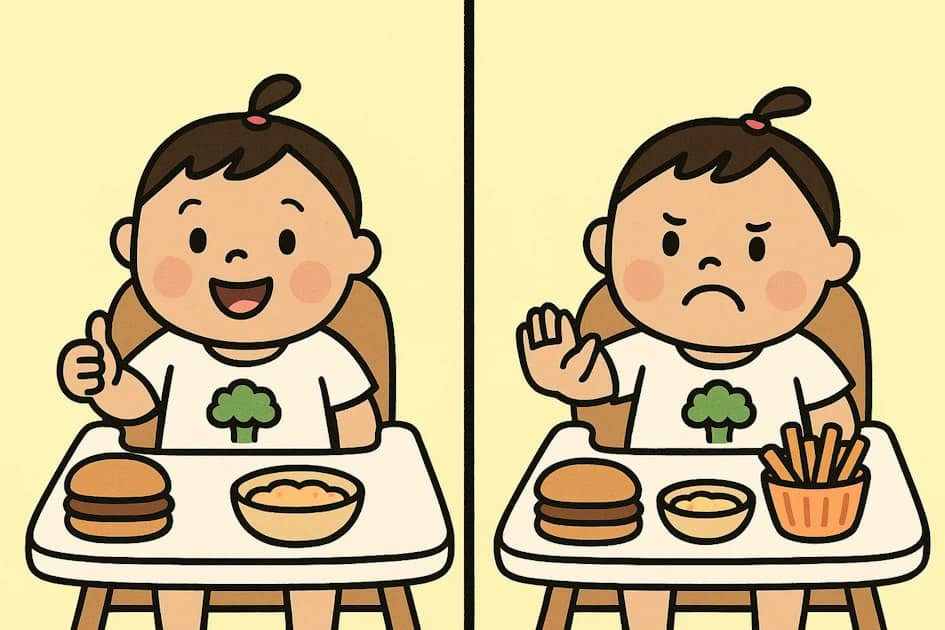
Sound familiar?
While it can be frustrating (especially when you just stocked up!), it’s very common for young children’s food preferences and appetites to change.
And most importantly: a food refusal today doesn’t necessarily mean your child no longer likes that food.
Why Is My Child Suddenly Refusing Their Favorite Foods?
There can be several reasons.
They may simply be tired of it
Think about your own eating habits. Even if you LOVE a certain food, you probably wouldn’t want to eat it every single day.
Kids are no different.
When we discover a food our child will reliably eat, it’s tempting to serve it over and over again because…well, THEY’RE EATING IT!
But sometimes they simply need a break.
They’re becoming more independent
Toddlers are discovering that they have opinions and can make choices.
And food happens to be one area where they have quite a bit of control.
You can decide what goes on the table, but you can’t actually make your child eat it.
So suddenly saying “no” to something they happily ate last week may have less to do with the food itself and more to do with exercising that newfound independence.
Their appetite changes from day to day
Your toddler doesn’t need the exact same amount of food at every meal or every day.
Growth, activity, sleep, illness, snacks, and many other factors can affect appetite.
So if your child doesn’t eat their favorite pasta tonight, don’t immediately assume they’ve stopped liking pasta.
They simply may not be that hungry.
Something about the food may be different
Young children can be VERY observant when it comes to food.
The banana is a little too brown.
The blueberries are squishier than usual.
The chicken has a crispy edge.
The yogurt is a different brand.
To us, it’s essentially the same food. To your child, it can feel completely different.
This is another reason I encourage exposing children to foods prepared and presented in different ways over time.
What Should You Do?
1. Try not to make a big deal about it
As tempting as it is, avoid:
“But you LOVE strawberries!”
“You ate this yesterday!”
“This is your favorite!”
“Just try it. I KNOW you like it.”
Instead, stay neutral.
You can simply say:
“You don’t have to eat it.”
And move on.
Sometimes the best response is no response at all.
The less attention we give the refusal, the less likely it is to turn into a power struggle.
2. Don’t immediately remove the food from the rotation
One refusal doesn’t mean you should stop serving that food altogether.
Your child might refuse blueberries today and happily eat a handful next week.
Continue offering the food occasionally without pressure, preferably alongside other foods they are comfortable with.
And keep the portion small! They don’t need a pile of something they’re currently unsure about. One or two pieces is plenty for continued exposure.
3. But it’s also okay to take a break
There’s a difference between continuing exposure and serving the same rejected food every single day.
If your child has been eating oatmeal every morning for three months and suddenly wants nothing to do with it, give it a little break!
Serve other breakfasts and bring oatmeal back another time.
Repeated exposure doesn’t mean relentless exposure.
Sometimes a little space is exactly what a food needs.
4. Offer foods in different ways
If your child suddenly rejects a food, experiment with how you serve it.
A child who doesn’t want roasted broccoli may be curious about raw broccoli with dip.
They may reject scrambled eggs but eat an omelet.
They might stop eating whole blueberries but happily enjoy them mashed into yogurt.
This isn’t about disguising or sneaking foods into meals.
It’s about helping your child experience the same food in different ways.
5. Get curious about what changed
Rather than immediately assuming, They don’t like it anymore, pay attention.
Are they refusing the food every time?
Only when it’s prepared a certain way?
Did the brand change?
Are they struggling with a particular texture?
Are they refusing lots of foods or just this one?
Sometimes these little observations can tell you a lot.
And if your child is old enough, ask without pressure:
“What’s different about it today?”
You may be surprised by the answer!
6. Keep offering variety
It’s easy to get stuck serving the same foods because they’re the ones you know your child will eat.
But this is exactly why variety matters.
You don’t need to serve something completely new at every meal. Instead, rotate through different familiar foods and continue exposing your child to other foods alongside them.
Think variety over time, not a perfectly varied plate at every meal.
7. Give them some control without becoming a short-order cook
Offering small choices can be really helpful during this stage.
“Do you want strawberries or blueberries with breakfast?”
“Would you like your cucumber in slices or sticks?”
“Do you want the sauce on top or on the side?”
These little choices give your child some autonomy while you still maintain the overall structure of the meal.
You decide what’s being offered.
They decide whether and how much to eat.
8. Keep exposing them outside of mealtime, too
Your child doesn’t have to EAT a food to become more comfortable with it.
Let them help wash produce, tear lettuce, stir ingredients, sprinkle cheese, or put vegetables onto a sheet pan.
Take them grocery shopping.
Read books about food.
Let them see you eating and enjoying a variety of foods.
All of these experiences help build familiarity without putting the pressure on your child to take a bite.
Zoom Out Before You Worry
One of the biggest things I encourage parents to do is zoom out.
Your child doesn’t need to eat every food group at every meal.
And one skipped vegetable or one day when they seem to survive on crackers and berries doesn’t tell you much about their overall nutrition.
Look at their eating patterns over time rather than getting stuck on one meal.
Food preferences during childhood can change again and again. Something they LOVE today may be rejected tomorrow…and welcomed back a month later.
That’s why I don’t want you chasing every preference or crossing foods off the list every time they’re refused.
Keep offering variety.
Keep the pressure low.
Keep modeling.
And give them opportunities to come back to foods in their own time.
Today’s “no” doesn’t mean “never.”