
This post may contain affiliate links. Please see our disclosure policy for more details.
Every single time I share a meal with meat and yogurt on Instagram, I get the same question:
“But doesn’t dairy block iron absorption?”

And it’s a GREAT question!
You may have heard that certain foods can interfere with iron absorption, but does that mean we need to avoid serving yogurt with meat? Or eggs with iron-rich foods? And what about the oxalates in spinach? 🫠
If you’re starting to feel like you need a nutrition degree just to put together your baby’s plate, I get it!
But here’s what I really want you to know:
Just because a food can reduce iron absorption at one meal doesn’t mean it’s going to cause iron deficiency.
And that’s a REALLY important distinction!
A lot of what we hear about these so-called iron blockers comes from studies looking at individual meals. But what happens at one meal doesn’t necessarily reflect what happens to iron levels over time.
So let’s break down what the research actually says and what this means for feeding your little one. I’ll link the studies for anyone who wants to dig deeper. Research nerd over here! 🤓
1. Calcium (the yogurt question!)
Let’s start with the BIG one!
Yes, calcium can temporarily reduce iron absorption at a single meal. But here’s where things get interesting.
A review of human studies found that while calcium reduced iron absorption in short-term studies, most longer-term studies didn’t show negative changes in iron status.
Even more reassuring, a study involving 103 infants found no meaningful differences in iron status between infants receiving standard iron-fortified formula and formula with substantially more calcium and phosphorus.
Of course, these findings don’t mean calcium never matters, especially for children who already have low iron stores.
Bottom line: YES, you can serve yogurt with meat! For generally healthy babies getting enough iron, there’s no need to routinely separate the two.
But what about cow’s milk?

This is where I DO want parents to be mindful!
Too much cow’s milk can increase the risk of iron deficiency, not just because of calcium, but because milk is low in iron, can displace iron-rich foods, and may contribute to intestinal blood loss in young infants.
That’s why the AAP recommends avoiding cow’s milk as a main drink before 12 months. After the first birthday, aim for around 16 ounces daily if your toddler drinks milk, and generally keep it below 24 ounces. Here’s the best milk for toddlers!
And yes, pasteurized plain yogurt and cheese can be introduced before 12 months!
2. Phytates
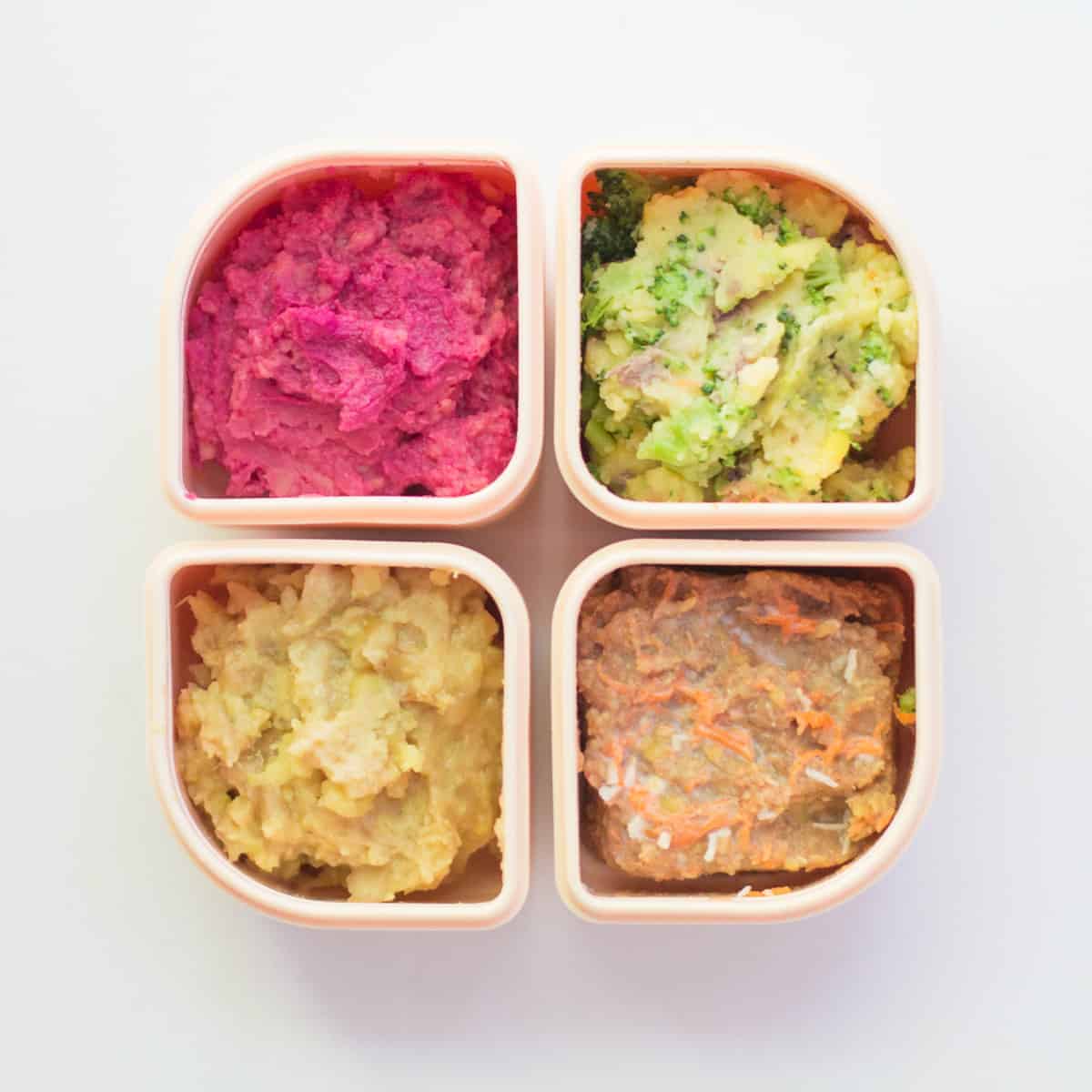
Phytates are naturally found in beans, lentils, whole grains, nuts, and seeds. They can bind to iron and reduce how much non-heme (plant-based) iron gets absorbed.
But please don’t avoid these foods! They’re packed with nutrients, including iron, fiber, and protein.
And here’s a simple trick: pair them with vitamin C!
Vitamin C helps improve non-heme iron absorption, even in meals containing phytates.
Think lentils with tomatoes, hummus with bell peppers, or oatmeal with strawberries.
Soaking, sprouting, and fermenting can also reduce phytate levels, although the effects vary by food and preparation method.
Bottom line: Keep serving beans, lentils, and whole grains! Pairing them with vitamin C-rich foods is helpful, but you don’t need to perfect every combination.
3. Oxalates (spinach, beets, and other vegetables)

You’ve probably heard that spinach contains iron, but oxalates prevent your body from absorbing it.
Well, the research tells a more nuanced story!
A human study found that oxalic acid did not significantly reduce non-heme iron absorption, suggesting oxalates may not be as important as commonly believed.
That doesn’t mean spinach is a great source of absorbable iron. It contains non-heme iron, which is generally less efficiently absorbed than heme iron from animal foods.
Bottom line: Keep serving spinach, beets, and other vegetables! Just don’t rely on spinach as your baby’s main iron source.
4. Certain proteins (eggs, dairy, and soy)
Yes, certain proteins found in eggs, dairy, and soy have been shown to reduce non-heme iron absorption in controlled studies.
But remember, these studies often look at individual meals, not long-term iron status.
And these foods offer SO much nutrition! Eggs provide choline and protein, dairy provides calcium and fat, and soy foods like tofu provide protein and iron.
They’re also common allergens that we generally want to introduce during infancy once babies are ready for solids, rather than unnecessarily delaying them.
Bottom line: Keep eggs, yogurt, cheese, and tofu on the menu! There’s no need to avoid these nutritious foods because of concerns about iron absorption alone.
So what actually matters for iron absorption?
Rather than worrying about all the things that might interfere with iron, I’d much rather you focus on what you CAN do!
Here are a few simple things that make a difference:
- Offer iron-rich foods regularly. Babies 7–12 months need 11 mg of iron daily, and toddlers 1–3 years need 7 mg. Here are best iron rich foods for babies and toddlers.
- Pair plant-based iron with vitamin C when you can. Think beans with tomatoes or oatmeal with berries.
- Include heme iron sources if your family eats them. Iron from meat, poultry, and seafood is generally more readily absorbed.
- Be mindful of excessive milk intake. Especially after 12 months, when too much milk can displace iron-rich foods.
And remember, you don’t have to do all of these things perfectly at every meal!
When does food pairing matter more?
If your child has iron deficiency or is at higher risk, being more intentional about iron intake and absorption may be important.
For example, iron supplements are often recommended separately from calcium-rich foods to help maximize absorption. And some children need supplementation because food alone may not correct an existing deficiency.
Always work with your child’s healthcare provider if you have concerns about their iron status.
The takeaway I really want you to remember!
You don’t need to optimize every single bite your baby eats.
Yes, certain foods can affect iron absorption at a meal. But that doesn’t mean those foods need to be avoided or separated every time.
Can you imagine trying to plan every single meal around what might interfere with what? As if feeding little ones isn’t complicated enough already!
Instead, focus on offering iron-rich foods regularly, pairing plant-based iron with vitamin C when you can, and providing a variety of nutritious foods.
What your child eats consistently over time matters much more than getting every single food combination just right.
Of course, if your child has iron deficiency or specific risk factors, individualized guidance matters.
But for everyday family meals, please don’t feel like you need to keep the yogurt and meat on opposite sides of the table. 😉
I hope this helps clear up some confusion and gives you one less thing to worry about!
If you have any questions, please let me know in the comments below! I’m always happy to help.