

This post may contain affiliate links. Please see our disclosure policy for more details.

Here’s the most current, evidence-based advice on introducing peanut butter to your baby, including the best time to start, the healthiest peanut butter options, and simple methods for incorporating it into your baby’s diet regularly.

Is Peanut Butter Safe for Baby?
Before introducing peanut-containing foods, it’s important to determine if your baby is at risk for developing food allergies. The most significant factor is family history. If at least one parent or sibling has an atopic condition—such as eczema, food allergies, allergic rhinitis, or asthma—your child is more likely to develop a food allergy.
Babies with eczema or asthma are also at risk. In such cases, it is strongly recommended to work with a pediatric allergist early on to create a plan.
When is the Best Time to Introduce Peanut Butter to Baby?
While waiting to introduce food allergens may seem like the safer route, there’s a lack of evidence supporting the idea that delaying the introduction of potentially problematic foods will actually protect the child.
On the contrary, there’s growing evidence showing that introducing allergens as early as 4-6 months of age, even to at-risk infants, can dramatically reduce the risk or actually help prevent the development of food allergies.
In a groundbreaking clinical trial called the Learning Early About Peanut (LEAP) study, peanut-containing foods were introduced and given regularly (3 times per week) to infants at high risk for developing food allergy. The result was up to an 86% reduction in the development of peanut allergy by 5 years of age.
As a result of these clinical studies, The American Academy of Pediatrics updated their recommendations from delaying the introduction of allergenic foods to say, there is no reason for parents to delay allergen introductions.
So when is the best time? The following recommendations are from the National Institute of Allergy and Infectious Diseases and The American Academy of Pediatrics.
4-6 months:
For high-risk babies, peanut products should ideally be introduced between 4 to 6 months. It is strongly advised to have an allergy evaluation or testing before trying peanuts. Your doctor may also suggest introducing peanuts in a supervised setting, like the doctor’s office.

Is your baby 4-6 months old?
Give your baby a head start on solids even before their first bite!
Around 6 months:
Babies with mild to moderate eczema are also at higher risk for peanut allergy. Therefore it is best to introduce peanut-containing products around 6 months and keep them in their diet to help prevent an allergy. Peanut can be introduced at home after other foods, but consult your pediatrician, who may recommend an allergy evaluation first.
This is also the optimal time for babies without eczema or other food allergies to start having peanut-containing products and other allergenic foods freely after they’ve successfully tried a few solid foods without any allergic reactions.

Is your baby 6 months old and up?
Learn all the secrets to starting solids safely while optimizing nutrition!
Which peanut butter is best for baby?
Here are the top criterias:
- Smooth and Creamy: Choose smooth peanut butter to minimize choking risks.
- Natural and Unsweetened: Opt for natural peanut butter without added sugars, salt, or artificial ingredients.
- No Added Oils or Preservatives: Look for peanut butter that contains only peanuts, or peanuts and a small amount of salt.
- All-Natural Brands: Some recommended brands include:
- Smucker’s Natural Peanut Butter
- Kirland’s Peanut Butter
- Teddie All Natural Peanut Butter
- Crazy Richard’s Peanut Butter
- Once Again Nut Butter
How to Introduce Peanut Butter to Baby at Home
Here are the steps to introduce peanut butter safely:
- Because I can’t emphasize this enough, if your baby is at high risk for allergies, consult with your pediatrician first!
- Mix a small amount (about a quarter of teaspoon) of smooth peanut butter with water, breast milk, or fomula to thin it out to avoid choking.
- Introduce earlier in the day. Most allergic reactions are immediate (within 2 hours of consumption, often seconds to minutes) so if you observe any signs, you can be in contact with your doctor. If your baby is having multiple mild to moderate symptoms or the reaction seems severe, call 9-1-1 immediately and ask for an ambulance and autoinjectable epinephrine.
Easy Ways to Serve Peanut Butter

Thinned Out: Mix smooth peanut butter with water, breast milk, or formula to create a runny consistency.
- Peanut Butter Puree: Blend peanut butter with fruit purees like banana or apple.
- Peanut Butter on Soft Foods: Spread a very thin layer on soft foods like toast strips or pancakes. Note that globs of peanut butter are a choking hazard. Here’s a guide on best bread for babies.
- Peanut Butter in Baby Cereal: Mix a small amount into your baby’s cereal for added flavor and nutrition. You can also add to this homemade quinoa baby cereal.
- Peanut Butter Puffs: These are great because they dissolve easily. You can offer whole puffs as finger foods for babies or crush the puffs and mix them with baby cereal or yogurt. I recommend Bamba Peanut Butter Puffs or Peanut Butter Puffworks Baby.
Baby Food Recipes with Peanut Butter
It’s not only important to introduce peanut butter at the right time, but also to maintain consistent, SUSTAINED exposure. Therefore, keep offering on a regular basis.
Here are some simple ways and recipes to include in your baby’s diet!
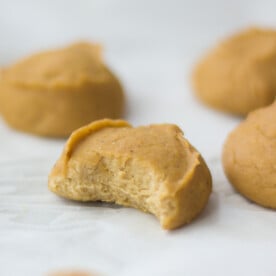
Peanut Butter Chickpea Cookies

Peanut butter yogurt

Homemade Baby Oatmeal
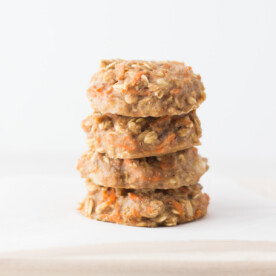
3 Ingredient Baby Cookies

Banana Oatmeal Bars

Beetroot Dip with chickpeas

Healthy Banana French Toast

Overnight Weetabix

Baby Meatballs

Healthy Beet Muffins for Babies

Banana Chia Pudding

Peanut Butter Waffles
If you want to learn how to prepare other specific food(s), check out my How To Series!